
IP40 vs IP54 vs IP65: Dust Protection, Water Resistance, and the Right IP Rating for Your Enclosure
Every electrical enclosure arrives with its own spec sheet showing an IP rating. But what makes an IP40 cabinet different from an IP54 or IP65 enclosure—and does it really matter? Which IP rating matters most depends on the enclosure location, application, and level of environmental aggressiveness.
This post de-constructs the IP code series digit by digit, compares the three most prevalent scores for server racks and industrial enclosures, and provides a decision framework for choosing the right ingress rating without overspending.
Quick Specs
| Standard | IEC 60529 |
| Ratings Compared | IP40, IP54, IP65 |
| Key Difference | Dust ingress level + water resistance grade |
| IP40 Summary | Objects >1 mm blocked; no water protection |
| IP54 Summary | Limited dust + splash resistant (10 min) |
| IP65 Summary | Dust-tight + water jet resistant (12.5 L/min, 30 kPa) |
| NEMA Approx. | IP40 ≈ NEMA 1 | IP54 ≈ NEMA 12/13 | IP65 ≈ NEMA 4 |
What Do IP Ratings Actually Mean? How the Two-Digit Code Works
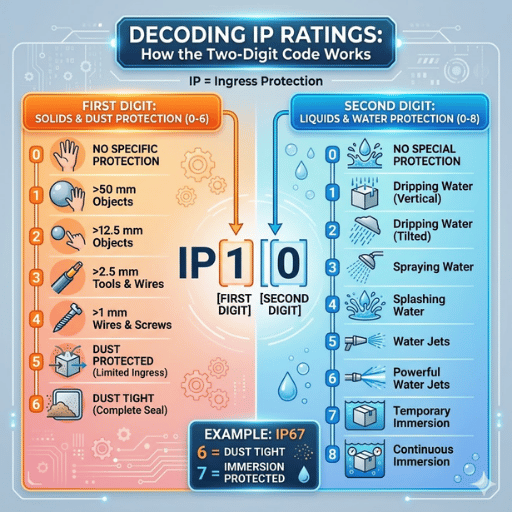
IP code — short for Ingress Protection rating — is an international standard defined in IEC 60529 by the International Electrotechnical Commission. It uses two numbers to describe the degree of protection an enclosure provides against solid particles and water. The first digit rates solid object protection on a scale of 0 to 6. The second digit rates water ingress protection on a scale of 0 to 9.
Reading an IP code is easy—start with “IP54” as an example. “IP” declares the number system in use. Its first number (4) indicates the level of solid object(s) defense. Its second number (5) indicates water defense level. Higher numbers mean, the tougher the IP score.
First Digit — Solid Particle Protection (0–6)
| Digit | Protection Level | Object Size Blocked |
|---|---|---|
| 0 | No protection | — |
| 1 | Large body parts | >50 mm (back of hand) |
| 2 | Fingers | >12.5 mm |
| 3 | Tools, thick wires | >2.5 mm |
| 4 | Thin wires, screws | >1.0 mm |
| 5 | Dust protected | Limited dust ingress (non-harmful) |
| 6 | Dust-tight | Zero dust ingress |
Second Digit — Water Ingress Protection (Key Levels)
| Digit | Protection Level | Test Condition |
|---|---|---|
| 0 | No protection | — |
| 4 | Splash from any direction | Oscillating fixture, 10 min |
| 5 | Low-pressure water jets | 6.3 mm nozzle, 12.5 L/min, 3 m distance |
| 6 | High-pressure water jets | 12.5 mm nozzle, 100 L/min, 3 m distance |
| 7 | Temporary immersion | 1 m depth, 30 minutes |
With that knowledge, every choice below becomes quite understandable. Whether you need IP40, IP54, or IP65—by understanding the IP system, you can decode any code: from IP20 on an agency-compliant indoor junction box to IP68 on an emergency submersible to IP66 on a basic fountain washer.
IP40 — Protection Against Solid Objects, Zero Water Defense
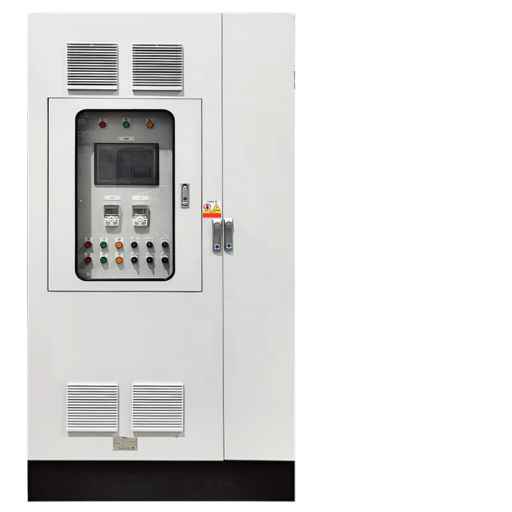
An IP40 rating indicates the enclosure prevents objects larger than 1 mm in diameter from entering—the size of wire, small screws, thin insects—while providing no ingress protection against water. Digit 4 passes the IEC 60529 wire test with a 1.0 mm diameter probe. No water test has yet been performed or rated, hence the 0 in the second digit.
Clients frequently confuse IP40 with “no protection,” a misconception. In reality, the typical indoor server rack is usually rated IP20, blocking particles greater than 12.5 mm in size (a finger). Upgrading to an IP40 server rack enclosure reduces particle penetration by 80%, preventing small debris from contacting electrical components without impeding airflow. (Clean, temperature-controlled server rooms and data centers need that particle filtration level and forgo any water protections).
✔ Advantages
- Prevents wires, screws, and particles larger than 1 mm from penetrating
- Minimizes flow restriction—necessary for both passive and active cooling
- Lowest cost among the three ratings compared here
- Suitable for indoor use in temperature-controlled environments
⚠ Limitations
- No water protection — any moisture contact is uncontrolled
- Provides no protection against fine particles (less than 1mm in size)
- Not recommended outside, in washdown environments, or humid factory/ manufacturing floors
- Not appropriate for any environment with condensation risk
IP40 rated enclosures are ideal for office server rooms, controlled data center environments, indoor telecom equipment closets, and dry manufacturing floors where accidental access to small solid objects is the most common risk. If you’re handing industry-standard environments with HVAC that need a cooling airflow, IP40 provides the optimal protection/ventilation balance.
IP54 — Partial Dust Guard + Splash Resistance from Any Direction
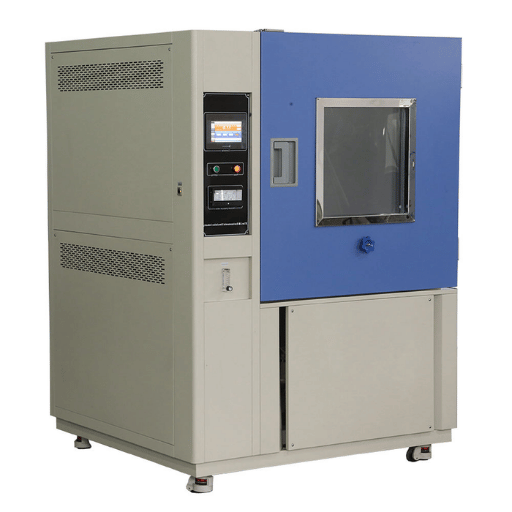
The IP54 rating pairs dust protection (first digit 5) with splash resistance (second digit 4). “Dust protected” under IEC 60529 means limited dust ingress is permitted, but not enough to interfere with the electrical equipment inside. Under IPX4, water testing uses an oscillating fixture that sprays water from every angle for 10 minutes — confirming the enclosure can handle splashing from any direction without letting water reach internal components.
IP54 equates to about NEMA 12 or NEMA 13 in the U.S.: predominantly indoor, NEMA-rated enclosures built for protection from drips, splashes, or falling dirt. Many semi-sheltered industrial environments need that protection level.
✔ Advantages
- Prevents dusty particles from reaching internal circuitry
- Provides splash resistance in any direction—resisting accidental water contact
- Moderate cost increase over IP40 (typically 5–10% premium)
- Suitable for semi-covered industrial floors, loading areas, and outdoor environments
⚠ Limitations
- Dust-proof and waterproof but not dust-tight—fine particles can eventually get in
- Cannot withstand directed water jets or sustained rain
- Not rated for outdoor use in exposed weather conditions
- Adjust periodically to maintain the rated level of protection
IP54 offers an economically balanced level of enclosure protection. It meets the dust and water challenges faced in warehouse, factory, covered parking lot, and sheltered rooftop environments. Such areas are not free of the elements nor are they climate-controlled, but they are not directly exposed to driving rain and strongwind either. For industrial applications in these locations, IP54 provides a sufficient level of dust- and water-proofing without paying the price of a fully sealed housing.
📐 Engineering Note
The IPX4 splash test does not record rainfall. It uses a variable flow oscillating spray fixture. In reality, rain usually surpasses the splash test criteria, especially in storms. For an outdoor housing, pay attention to if the recommended minimum of IP65 or above is necessary.
IP65 — Complete Dust Seal + Low-Pressure Water Jet Protection
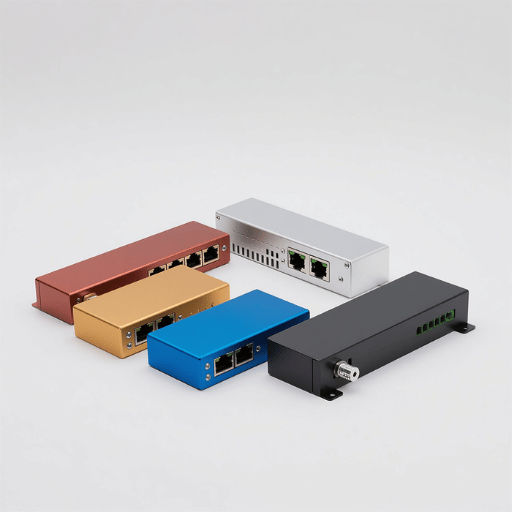
IP65 is fundamentally a different step in enclosure protection. First digit 6 means complete protection against dust – the IEC 60529 test encapsulates the enclosure in an 8-hour vacuum chamber with circulating talcum powder. Now there is zero slip for dust ingress. Second digit 5 is rated for low-pressure, 6.3mm diameter water jets directed at the enclosure from all directions. At 6.3mm, the jet pumps 12.5 L/min at 30 Kpa from 3 m, a volume and force which greatly exceeds normal rain.
IPX5 water test specification is carefully defined: A 6.3 mm diameter nozzle pump of 12.5 L/min at 30 Kpa from 3 meters distance for not less than 3 minutes to exposed surfaces. This rate of flow at this pressure vastly exceeds normal rainfall, which is why IP65 enclosure protection is standard for outdoor sites with exposure to nature, unprotected rooftop situations and industrial environments with regular washdown.
✔ Advantages
- Dust-tight — zero particle ingress after 8-hour vacuum test
- Resists water jets at 12.5 L/min from any direction
- Suitable for outdoor equipment, exposed sites, and wet environments
- Suited to all sizes of outdoor lighting and fixture installs
- NEMA 4. roughly the same – common in industrial design
⚠ Limitations
- Higher than IP54 ( usually 10-20% above IP40) cost
- More effective sealing makes for less free flow of air- forced airflow may be needed.
- Not rated for immersion and submersion needs IP67 or IP68
- More massive build because of stiffer gaskets and machined edges.
📐 Engineering Note — IEC 60529 IPX5 Test Parameters
Nozzle dia: 6.3mm | Flow rate: 12.5 L/min | Pressure: 30 Kpa | Distance: 3m | Duration: 3min each face | Dust test=8 hours, vacuum and talcum powder with no ingress permitted.
IP65-rated enclosures are used every where outdoors..parking lot lighting fixtures, roadway telecom enclosures, housings for solar inverter setups, military grade camera protection against the elements, SWAT team command stations run from a dropped shipping container, production line control panels in a slaughterhouse that must be hosed down. IP65 is the standard for enclosures that need to be outdoors but still handle the environment reliably.
For bigger exposure situations, IP66 offers an extra step with 100 L/min of flow impingement for the nozzle opening – high pressure water jet protection. But most outdoor uses fall within what IP65 offers — and at lower cost than IP66.
If you’re specifying enclosures for outdoor environments, confirm whether the manufacturer tested the assembled product (including cable glands and door seals) or merely the housing alone. Using a purpose-built enclosure from KDST allows testing of the complete assembly, avoiding the gap between lab-rated housings and deployed home.
IP40 vs IP54 vs IP65 — Side-by-Side Comparison Table
All three of these ratings are shown next to test parameters so you can easily compare the level of protection offered at a glance—from IP40 through IP54 up to IP65.
| Feature | IP40 | IP54 | IP65 |
|---|---|---|---|
| First Digit | 4 | 5 | 6 |
| Solid Protection | Objects >1 mm | Limited dust ingress | Dust-tight (zero ingress) |
| Second Digit | 0 | 4 | 5 |
| Water Protection | None | Splash from any direction | Water jets 12.5 L/min |
| Water Test Duration | N/A | 10 minutes | ≥3 minutes |
| Water Test Pressure | N/A | N/A | 30 kPa |
| Dust Test Method | Probe test only | Talcum powder chamber | 8-hour vacuum sealed |
| NEMA Approx. Equivalent | NEMA 1 | NEMA 12/13 | NEMA 4 (partial) |
| Typical Application | Indoor server rooms | Semi-sheltered industrial | Outdoor / wet environments |
| Relative Cost Index | 1.0× (baseline) | ~1.05–1.10× | ~1.10–1.20× |
What About IP67 and IP68?
For completeness: IP67 adds temporary immersion in water — the test submerges the enclosure to 1 meter depth for 30 minutes. IP68 covers prolonged immersion in water at depths and durations specified by the manufacturer (often 1.5 m or deeper for extended periods). These ratings apply to equipment that may actually be submerged — underground junction boxes, underwater sensors, and marine connectors. For above-ground server racks and industrial enclosures, IP65 typically represents the highest practical rating before diminishing returns set in.
Note: Do not confuse “water resistant” with “waterproof.” IPX4 (splash) signifies enclosure durability against incidental water contact; IPX5 (jets) signifies durability against directed water flow. That distinction between IP54 and IP65 is the difference between surviving a spilled bucket and surviving a fire hose at moderate pressure. Design accordingly.
When assessing the difference between IP54 and IP65 enclosures, consider the environment they will be deployed in rather than the numerical rating alone. Each rating offers a different balance of “risk vs mitigation” — matching protection to expected exposure. An IP65 enclosure in a sealed data center is an unnecessary investment in gaskets and grommets; an IP54 cabinet atop a sunny, windy rooftop invites water damage before too long. For additional information on the relationship between IP and NEMA ratings, see our NEMA vs IP rating comparison guide.
Which IP Rating for Server Racks and Electrical Enclosures? A Decision Framework
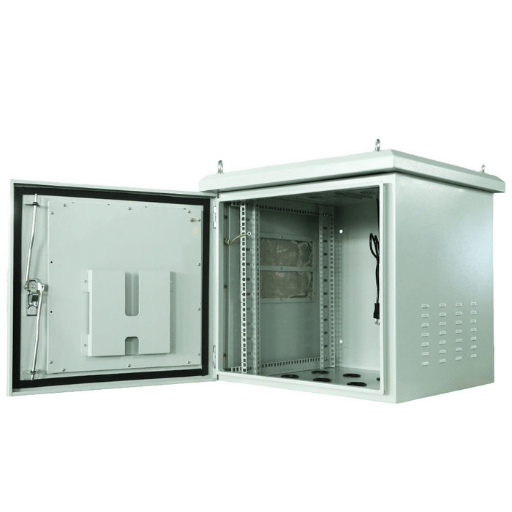
Choosing the appropriate IP rating begins with identifying the environment in which the enclosure will be installed. Below is a text-based decision tree that covers common applications for server racks, network enclosures, and industrial equipment cabinets.
Decision Flowchart
1. Will the enclosure be installed indoors, in an environment where humidity is carefully controlled (climate control, HVAC)?
IP20 or IP40- Solid object protection at a basic level or an enhanced level respectively. Select IP40 enclosures if there is a danger of intrusion by small projectiles (sharp wire clippings, tools, fasteners, pieces of paper).
2. Will the enclosure be installed indoors, but subject to occasional dust or splash damage, or the possibility of condensation?
IP54- Ingress protection against both particulate intrusion as well as splash shocks from mild washing down, damp washrooms, or farm facilities.
3. Will the enclosure be installed outdoors or subject to wash down procedures (i.e., stormwater runoff, pressure washing, rain)?
IP65 or greater- Ingress protection against particulate matter intrusion as well as high-pressure or low-pressure water jets. IP65 is a requirement for any outdoor or exposed environment enclosure of a network, a data center, or a food processing area.
📐 Engineering Note
The overall IP-rated specifications of each enclosure are determined by the least protected element. Gaskets, filters, collar seals, and panel locks can all bring down the level of ingress protection of the whole system. A housing rated IP65, with plug/junction boxes rated IP54, virtually functions as IP54 at the system level. Ensure all interface points match or surpass full enclosure protection.
Overspecifying the IP rating can cause significant project cost increases. Industry research suggests that using a higher-than-necessary rating can push project budgets upward by 25-40% by virtue of increased material, higher precision parts, and additional certification fees. select based on actual environment, not your client’s sense of style.
Similar mythbusting2: “Higher IP always means better”. This only applies when the environment warrants it. In a clean office server room an IP65 enclosure is a needless cost increase, with no corresponding level of risk.
Alternatively, the tighter gasket seals reduce passive airflow, which may necessitate additional active ventilation, again increasing cost and, ultimately, a greater chance of failure. Match your IP specification to your actual operational environment in industry – and receive no higher.
For multi-environment projects (indoor control room + outdoor antenna mount for example) KDST produces client-specific protective housing rated for each location rather than providing one blanket rating and mounting in all locations, keeping costs closer to the actual risk.
Frequently Asked Questions

Q: Is IP54 better than IP65?
View Answer
Neither is clearly “better”. IP65 has better protection from dust (dust tight vs. dust protected), and also can better handle direct jets of water (directed jets vs. splash only). On the other hand, the IP65 enclosures are more expensive, heavier, and have greater airflow resistance than the IP54 units.
If the application is inside a facility, and only spray from the washdown, than go with the IP54 here. If the enclosure is outdoors and the weather or washdown, the IP65 is the minimum rating to specify. Your correct answer is entirely application driven, not rating driven.
Q: Is IP54 ok for heavy rain?
View Answer
No. IPX4 splash testing requires oscillation for 10minutes – no test. Heavy rain creates greater volumes of water falling at more severe angles than the splash test covers.
In the event of direct rain entry, IP65 (water jets, 12.5L/min) is the minimum. IP66 gives safeguard under driving rain or monsoon weather.
Q: Does IP54 mean waterproof?
View Answer
Incompletely. IP54 states the enclosure can withstand water splashing from all directions over 10 minutes. It will not withstand jets of water, continuous immersion or high pressure spray.
This level of protection is more correctly called splash proof. If the enclosure requires protection from directed flows of water then specify IP 65. For protection from being submerged then you are into IP 67 or IP68.
Q: Is IP65 enough for rain?
View Answer
Q: How does the cost differ between IP54 and IP65 rated enclosures?
View Answer
Generally, IP65 enclosures tend to be 10-20% more than a similar sized and material IP54 enclosure. The additional cost is due to heavier sealing gaskets, more accurate machining tolerances on the panel joints, and the required 8 hour vacuum dust-tightness testing needed to certify the enclosures as IP65 but not IEC 1131 IP54. When considering a specified enclosure surround the additional over-specification by 25-40% (material, tests, mounting hardware, etc).
Keep in mind to match the enclosures to the application’s actual environment not the maximum rating.
Q: Can I upgrade an enclosure’s IP rating after manufacturing?
View Answer
Yes, in some respects. Gasketed/flat-sheeted doors, take up extra room in the panel and replace all items to be of an IP-rated version. Seal any empty panel cutouts with blanking plates.
Note that the enclosure shell must be suitable for the protection level, ie. if the shell shell isn’t physical dimensionally capable of being sealed to the IP level, as any gasket won’t get that to IP65 if the joint gaps have mm tolerances. After the reap whatever it is, ask a 3rd party test lab to fulfill the IEC 60529 tests and see if it really achieved the level claimed.
Need a Server Rack Enclosure Rated to Your Exact Environment?
KDST custom makes protective enclosures so whether standard IP40 indoor cabinets or IP65 outdoor enclosures are required we will prepare a solution to suit your application.
About This Comparison
KDST has a range of IP rated enclosures for telecom and data center applications. This comparison is based on IEC 60529 test specifications and data from the enclosure industry. IP ratings are defined by the environment in which they will be deployed.
Contact your integration team for site specifics.
References & Sources
- Cotes de protection des matériels schématises par la norme IEC 60529 – Commission Electrotechnique Internationale
- IP Code — Wikipedia
- IP codes and NEMA enclosure ratings compared. Fibox, a manufacturer of enclosures and control cabinets, often specifies an IP code for its products and lists the NEMA enclosure rating that they correspond to. However, they would apparently like you to buy from here without knowing these conversions.
- 5 IP Hinnang on Olulist Vääratum – Radonix
- Server Rack IP Ratings – Serverrom Miljøer


![What Is a Power Box? Types, Functions & Selection Guide [2026]](https://www.kdstelectrical.com/wp-content/uploads/0-9-300x200.png)
