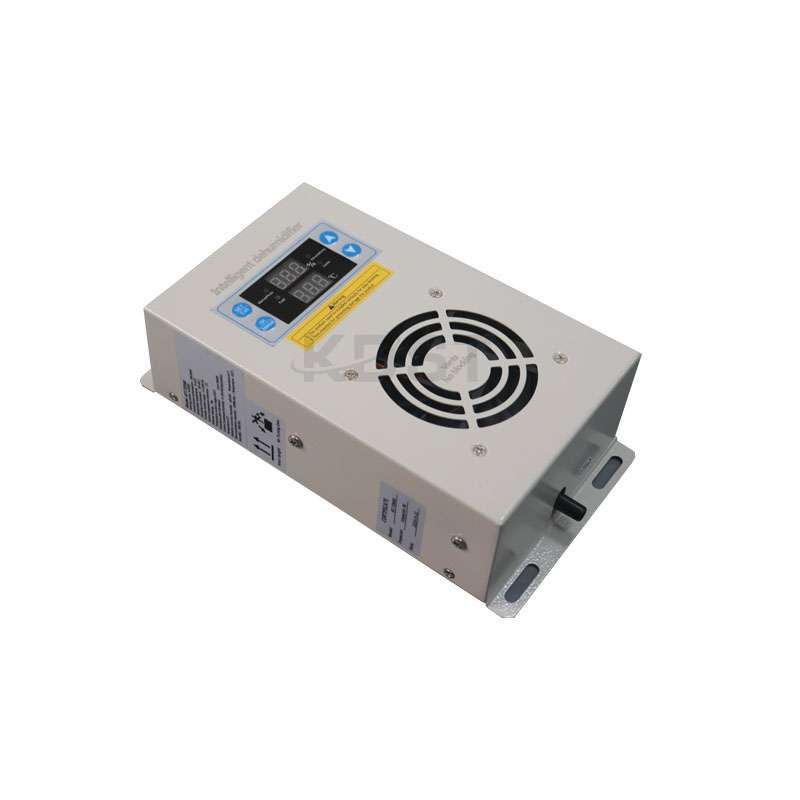
Semiconductor Air Conditioner
Semiconductor Air Conditioner: Cool Your Space with Thermoelectric Peltier Technology
Semiconductor air conditioners use Peltier thermoelectric technology to deliver energy-efficient, compact, and environmentally friendly cooling, suitable for small spaces or DIY applications, making them a strong alternative to traditional air conditioning. This guide explains the science, technology, and practice behind this innovative cooling.
What Is a Semiconductor Air Conditioner?
Thermoelectric cooling (TEC) is a new form of air-conditioning system that uses semiconductor materials to absorb heat rather than generate electric current. Heat is dissipated on the other side under the combined effect of these thermoelectric standards. So the heating and cooling can be accurately controlled. TEC technology stands out from the mainstream refrigeration modes, including compression and absorption, without requiring compressors or refrigerants.
Compared with traditional compressor-based systems, TEC-equipped air conditioners can be operated on DC power anywhere, making them ideal for off-grid battery compartments and cabinets with telecom equipment. These additional benefits make them especially worthwhile in areas with frequent power outages, where they continue to operate and provide reliable temperature control for critical equipment.
Air Conditioning Selection of Semiconductor Air Conditioner
How to Choose the TEC Air Conditioner
To ensure optimal thermal control performance, please select the appropriate TEC air conditioner model based on the following key factors:
| 📦 Cabinet Size | Larger internal volume requires higher cooling capacity | For small enclosures, use 100W; for standard telecom cabinets, choose 200W; for complex systems, consider 300W or more |
| 🌡️ Ambient Temperature | Higher ambient temperatures require stronger cooling | For environments above 45°C, choose 300W or combine with additional ventilation |
| ⚡ Power Supply | Check if DC power is available (e.g., 12V / 24V / 48V) | Make sure the selected TEC unit matches your power source |
| 🎯 Temperature Precision | Determine if high temperature accuracy is required | For high-precision control, choose a model with digital temperature control |
| 🛠️ Installation Space | Consider available space for installation | TEC units are compact and support panel or embedded installation |
| 🔁 Temperature Mode | Need both heating and cooling? | Some models support dual-mode (heating + cooling) for year-round use |
| 🧰 Application Type | Is it for telecom, power, medical, or energy applications? | Different industries require different features or interfaces—custom options available |
For this load, we recommend a Semiconductor model.
Why Choose Semiconductor Air Conditioner?
Key Features:
● Eco-Friendly: No refrigerant leakage, Freon-free, environmentally safe
● Silent Operation: Without a compressor; low noise level, free from vibration
● Compact & Lightweight: Small size, compact structure, easy to install in confined spaces
● Dual-Mode Temperature Control: Fast heating or cooling to cater for year-round applications
● High Reliability: Solid state circulation, no moving parts, minimal maintenance, long life
● DC Powered: Operated in off-grid environments, powered directly from the batteries
● Precise Control: Targets lasers, telecoms, and lab equipments that require accurate temperature control
Technical Advantages:
● Supports multi-stage cooling module designs for applications with high power
● Simplified overall system structure, easy addition to a PLC or remote control system
● Customizable dimensions and heat exchange configurations to fit various cabinet system configurations
Working Principle of TEC Thermoelectric Air Conditioner
The TEC air conditioner offers a state-of-the-art cooling solution that is relatively new compared to traditional vapor-compression systems. This cooling solution comprises a set of cooling elements that induce solid-state cooling without mobility mechanics. Heat is transferred from the cabinet’s cold side to the outside by partially applying direct current to the Peltier module. Electron movement in the solid-state cooling structure contributed to this, with one side absorbing heat and the other dissipating it. The company offers proper heat sinks and fans on each side to improve heat dissipation and performance. Put differently, this cooling solution can be operated in a smaller form factor without generating irritating noise and with high reliability, making it a suitable option for telecom shelters, battery enclosures, or laboratory environments where precise, clean, and maintenance-free cooling is essential.
Success Case: Mini Outdoor Telecom Cabinet Cooling Application
The case study illustrates the successful commissioning of a KDST TEC air conditioner installed in a compact outdoor telecom equipment cabinet. It houses low-power communication modules and monitoring sensors that operate in an area with high exposure to sunlight and ambient temperatures often exceeding 55°C.
To ensure their internal components perform well under full heat, they selected a 100W thermoelectric (TEC) air conditioner for precise temperature control.
These devices are typically quiet in operation and have no compressor or vibration. This makes the traditional sealed environment of TEC advantageous for compact spaces. With solid construction and flexible Peltier modules, maintenance is much simpler because it does not require handling refrigerant.
The system performed well after installation, including under high temperatures, extending the communication module’s service life and significantly reducing the observed failure rate.
Where TEC Cooling Excels
Related Technical Resources of Semiconductor Air Conditioner
What Is the Difference Between NEMA 3R and NEMA 12 Enclosures?
Updated August 2026 · A hazard-based comparison for industrial enclosure...
Read MoreWhat is the difference between Dell rack and Tower? Dell...

Read MoreNEMA Enclosure Types Explained: The Complete Ratings Guide (1, 3R, 4, 4X, 12)
Compare every NEMA enclosure type in one ratings guide: what...
Read MoreWhat is NEMA used for? In electrical and electrical equipment...
Read MoreRelated Products of Semiconductor Air Conditioner


Frequently Asked Questions
How Peltier Modules Create Cooling and Heating Effects?
Peltier modules are solid-state heat pumps being used for semiconductor cooling systems, finest for their splitting into a cold side and a hot side. When they are supplied with electric power, a heat is pulled from one side to flow to the other regrind, and the reversing provides cooling or heating. The efficiency of Peltier elements depends on factors like current, module design, and how well-matched the heat sink is to that module, therefore ensuring temperatures are maintained precisely for their applications.
What Components are Included in a Typical Semiconductor Air Conditioner DIY Kit?
A typical DIY kit for semiconductor air conditioners includes a Peltier module, a heat sink with a fan, a power supply, a temperature-control circuit, wires, and connectors. Some kits include additional insulation, mounting hardware, and enclosures. All those components are indispensable for optimal performance and efficiency.
Is a DIY Peltier Cooler Project Right for You?
An assembly process of a Peltier cooler is quite a pleasurable experience for anyone who loves to work with their hands and has some electronics experience. It requires technical know-how as well as problem-solving capacity and hence, it offers a highly specific and customized cooling solution. If one is looking for something quick and easy rather than getting into the assembling process, a ready-made semiconductor cooling system is a better choice.
How Efficient are Semiconductor Refrigeration and Thermoelectric Air Conditioner Systems?
Semiconductor refrigeration and thermoelectric air conditioners are portable and environmentally friendly, but not as energy-efficient as traditional vapor-compression systems when used for large rooms. They perform exceptionally well when cooling precise regions of the air, and they tend to improve with new materials and practice-wise designs. Excellent performance will entail choosing the right Peltier module, working with effective heatsinks and insulation, and using temperature controllers. Heat sinks and insulation will prevent Peltier’s element from becoming too hot; therefore, the two are quite necessary to keep low heat transfer and maximal heat being delivered to the Peltier element to ensure soundness of cooling performance.
What are the Best Applications for a Semiconductor Air Conditioner Module?
Semiconductor air conditioners and Peltier modules feature compactness, lightweight design, and energy efficiency and have refrigerating applications. These devices, so ideal for portable cooling, provide cooling targetedly within tents, RVs, and outdoor work areas and can be battery or solar powered. Peltier modules find a lot of application in electronics cooling and ensure that these cooling systems meet precision temperature requirements of the microprocessors and laboratory equipment. Several new applications are emerging as well, including cooling vests for medical or athletic use, automotive seat cooling, portable refrigerators, and renewable energy systems. A wide range of innovative uses is currently being explored in varied industries for these very versatile technologies.
What is a thermoelectric peltier semiconductor air conditioner and how does the peltier device work?
Thermoelectric Peltier air conditioners use TEC modules to conductively transfer heat, rather than the traditional vapor-compression cooling cycle. Upon application of a DC 12V or other desired voltage, the thermoelectric chips in the TEC would begin to conduct current, with one side cooled and the other heated. In operation, the cold side would provide cold air or localized cooling, while the hot side would require a heatsink, radiator, or other cooling arrangement. Common module types include TEC variants such as the TEC1-12706. The system is typically configured with the TEC module mounted with a blower/fan, heatsink, and a reliable power supply, resulting in an effective cooling system for our small air-cooled cabinets.
Can a semiconductor air conditioner provide both heating and cooling, and how is dual-mode achieved?
Thermoelectric systems do indeed heat and cool by reversing the current through the Peltier device, allowing the operation in a dual mode so that in one polarity, heat is pumped away from the selectively cooled space, producing chilled air, while in the other polarity, the side becomes hot and is available for heating. This function underscores the great versatility for small applications, for example, when used in Peltier-based mini air conditioners. Nevertheless, the heating efficiency is generally lower than that of dedicated resistive heaters or heat-pump HVAC systems for large spaces.