NEMA 3 Outdoor Cabinets: What Engineers and Buyers Need to Know
Choosing the wrong enclosure rating for outdoor electrical equipment can have serious consequences such as water damage, early component failure, and expensive downtime. A NEMA 3 outdoor cabinet offers a specific degree of protection against rain, sleet, windblown dust, and external ice formation but it is not appropriate for all applications. This article breaks down the coverage provided by the NEMA 3 rating, how it differs from NEMA 3R and NEMA 4, and the types of construction and mounting configurations that work well for telecom, solar, HVAC, and industrial applications. Whether you are specifying enclosures for a new 5G cell tower rollout or replacing aging outdoor electrical cabinets at a utility substation, the following information will help you select the right rating based on protection needs, environment, and budget.
What Is a NEMA 3 Outdoor Cabinet?

A NEMA 3 outdoor cabinet is an electrical enclosure rated to meet ANSI/NEMA 250-2020 specifications to prevent penetration of enclosed equipment by the effects of falling dirt, windblown dust, rain, sleet, snow, and external ice formation through the enclosure. The National Electrical Manufacturers Association (NEMA) created these type designations so that engineers, site owners, and maintenance managers can match an enclosure to the specific environmental risks at a given site.
For enclosures intended solely for indoor use (NEMA Type 1 or Type 2), the NEMA 3 designation indicates gasketed doors, sealed cable entries, and weatherproof hardware that allow it to perform in both indoor and outdoor environments. However, this rating does not provide protection from hose-directed water, submersion, or internal condensation – those conditions call for higher-rated enclosures like NEMA 4 or NEMA 6.
As indicated by the NEMA Enclosure Types guide, a NEMA Type 3 enclosure is rated to IEC 60529 IP55 standards – meaning it prevents the ingress of dust such that it will not interfere with equipment operation, and it is resistant to water jets from any direction. The NEMA rating actually includes additional testing for ice formation and external influences that the IP code doesn’t include, therefore the two standards are not interchangeable.
NEMA designations can be translated to minimum IP ratings (NEMA 3 IP55), but not vice versa. An IP55-rated enclosure cannot be assured of meeting NEMA 3 conditions, because the latter also tests for gasket aging, corrosion, and external ice formation which IEC 60529 does not consider.
NEMA 3 vs NEMA 3R vs NEMA 4: Which Rating Do You Need?
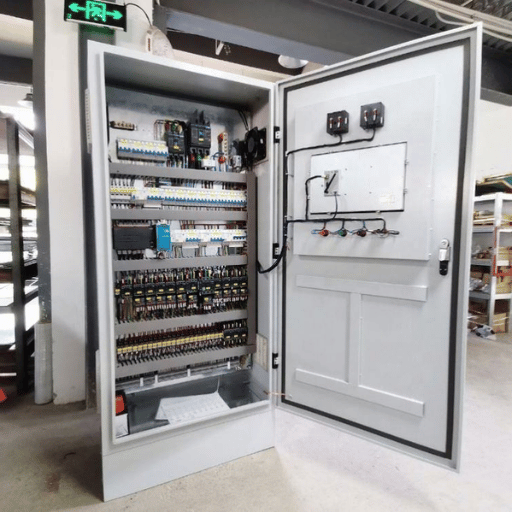
Confusion most often arises when selecting outdoor enclosures due to the similarities and differences between NEMA 3, NEMA 3R, and NEMA 4. All three ratings are suited to outdoor use and block rain and sleet, they just differ in dust ingress, water penetration, and cost. Refer to the comparison below based on the NEMA 250 and IEC 60529 comparison by the National Electrical Manufacturers Association.
| Protection Factor | NEMA 3 | NEMA 3R | NEMA 4 |
|---|---|---|---|
| Rain, sleet, snow | Yes | Yes | Yes |
| Windblown dust | Yes (dust-tight) | No | Yes (dust-tight) |
| External ice formation | Yes | Yes | Yes |
| Hose-directed water | No | No | Yes |
| Minimum IP equivalent | IP55 | IP14 | IP66 |
| Ventilation capability | Limited (sealed) | Yes (vented lids/louvers) | No (fully sealed) |
| Relative cost | Medium | Lowest | Highest |
NEMA 3R is the most common outdoor enclosure rating specified because it provides natural ventilation through vented lids or louvers – an essential benefit for heat-generating electrical components. In return, NEMA 3R no longer seals out windblown dust, and would never be used in any desert or high-particulate environment. In those environments, a dust-tight NEMA 3 enclosure is the best choice.
NEMA 4 improves protection against hose-directed water and splashing at the expense of cost and size. In situations where the conditions are spray-wash-down, NEMA 4 is an improvement. Another example is a blower-sprayer in an outdoor telecom, solar or utility application. For that type of equipment, NEMA 3 or 3R construction offers sufficient protection at much lower operating costs.
Time and again, we see large and small capital costs increase when a NEMA 4 cabinet is hoisted, exactly the same size and built from the same materials as a NEMA 3R. The operator generally chooses the NEMA 4; but later, the three compromises that lead to a 50% cost premium remain undiscovered: active cooling to guard against the sealed design, lost passive ventilation benefits, and a sealed cooling package.
Quick Selection Guide
- Common outdoor installations where passive airflow is needed (circuit breaker panels, disconnect switches, utility metering) NEMA 3R
- Sites with windblown dust or sand (desert locations, cement plants, grain handling facilities) NEMA 3
- Exposure to hose-directed water or high-pressure washdowns NEMA 4
Construction Materials for Outdoor Electrical Enclosures

Many different material samples enter the market each year to compete for outdoor cabinet applications. Four materials dominate the NEMA 3 enclosure industry; and whereas they can be used in all five of the applications listed below, each has disadvantages in terms of weight, corrosion resistance, service life, and cost.
| Material | Typical Gauge | Salt Spray Resistance | Best For |
|---|---|---|---|
| Carbon steel (powder coated) | 14–16 ga | 500–1,000 hours with coating | General outdoor, cost-effective for budget-sensitive projects |
| Galvanized steel | 14–16 ga | 200–500 hours (zinc layer) | High-humidity, mild industrial |
| Stainless steel 304 | 14–16 ga | 200–500+ hours bare | Indoor/mild outdoor, food processing |
| Stainless steel 316 | 14–16 ga | 500–1,000+ hours bare | Coastal, marine, chemical exposure |
| Aluminum (5052/6061) | 0.080–0.125 in | Naturally resistant (oxide layer) | Weight-sensitive, pole-mount, telecom |
| Polycarbonate / Fiberglass | N/A | Immune to corrosion | Non-metallic required, UV exposure, clear cover needed |
Salt spray resistance depends on both the material and the coating covering it. This test uses a 5% NaCl fog used at 35 C; and measures the amount of time in hours until a visible corroded spot appears to the naked eye. Stainless steel 316 has 2-3% molybdenum in the alloy, providing superior pitting and crevice attack resistance in chloride-laden environments.
Powder coating is the preferred surface method for encapsulating carbon steel enclosures. At 3-5 mil thickness over a phosphate pre-treated steel, good quality powder coating can last over 1,000 hours in the salt spray. Gray (RAL 7035 or ANSI 61) is still the dominant cabinet color throughout the industry. It greatly reduces solar heat gain compared to darker colors.
“In our experience making outdoor cabinets for telecom and solar applications throughout many different climate zones, the most common specification mistake we see is choosing 304 stainless steel for coastal locations. In that environment, the salt air can cause corrosion within 2-3 years. For any site within ten miles of salt water, 316 stainless or aluminum with marine application coating is the safest choice.”
— KDST Engineering Team
Always specify the base metal and the surface finish of a NEMA 3 metal cabinet when ordering. Suppliers always relay two: a specification and a coating method (powder type, 3-5 mil layer, pretreatment). Visual appearance may be identical; but performance can be very different.
Common Applications for NEMA 3 Outdoor Cabinets

NEMA 3 and NEMA 3R enclosures are the industry standard for housing outdoor electrical and electronic equipment. Because windblown dust particles are blocked by NEMA 3, the housing is ideal for environments with high levels of airborne dust.
Telecommunications and 5G Infrastructure
Three overall market opportunities are driving demand for NEMA 3 outdoor telecom cabinets. The worldwide outdoor telecom enclosure market was estimated at 3.1 billion dollars in 2024 and grows near 7% CAGR forecast through 2033. The overall 5G infrastructure industry was valued at 16.37 billion dollars in 2024 and is expected to reach 62.10 billion dollars by 2033 at a CAGR of 14.9 % according to Grand View Research analysis of 5G infrastructure market. Every new small cell site, fiber distribution hub, or edge computing node needs a weatherproof outdoor cabinet to house radio units, power supplies, fiber optic patch panels, and battery backup systems. Aluminum NEMA 3 cabinets are the preferred pole-mount option for telecom applications. They are lightweight and don’t corrode without paint considerations.
Solar Energy and Battery Storage
Outdoor solar installations rely on NEMA 3 or NEMA 3R cabinets to house inverter, charge controller, combiner boxes, and battery management equipment. In desert solar farms a more sealed NEMA 3 enclosure is needed but a vented NEMA 3R cabinet with a dust-tight seal is enough. In temperate climates a NEMA 3R cabinet can help with ventilation of heat-generating inverters.
HVAC and Building Automation
HVAC rooftop and exterior control panels also regularly use NEMA 3R cabinets. They house PLC’s relays, contactors, and communication modules for heating, ventilation, and air conditioning. Building entry points at the bottom of each enclosure connect to control sensors and actuators throughout the building.
Utility and Power Distribution
Many electrical utility applications use NEMA 3R cabinets for outdoor disconnects, metering equipment, transformer tap changers, and distribution automation controllers. Ventilation is important in this design to prevent an operational junction box from turning into a ceaseless heat source as circuit breakers and contactors generate heat. Vented NEMA 3R enclosures can be used to house these designs. Examples include streetlight, parking lot, and outdoor signage control panels.
- ✔
Dusty or sandy environment NEMA 3 (dust-tight seal needed) - ✔
High heat load from equipment NEMA 3R (passive ventilation through vents and louvers) - ✔
Washdown or hose-spray exposure NEMA 4 (watertight, hose-directed water) - ✔
Coastal or marine environment NEMA 4X (corrosion resistant stainless or fiberglass)
Installation, Mounting, and Accessories

How a NEMA 3 outdoor enclosure is mounted has implications for access points, structural loading, infrared performance, and maintenance access. Four basic mounting schemes account for 90 percent of outdoor cabinet installations.
Mounting Options
- Wall mount – attach the enclosure to a building wall or structural column with external mounting brackets. This mount is typical of small to mid-size (up to something like 36×36) enclosures. Select mounting hardware to match wall substrate (concrete anchors, steel through-bolts, or lag screws for wood framing).
- Pole mount – bolt the cabinet down to a steel pole or utility pole with banding straps or bolt-on brackets. Used for telecom cabinets, control boxes for advertising signage, or transit metro signs. In particular you want to use an aluminum enclosure to reduce loading on the pole for large telecom cabinets.
- Floor mount (free-standing) – set the enclosure on a concrete pad or steel rack at floor level. Use this with metal-enclosed switchgear, battery banks, distribution panels, or large cabinets. Many floor-mount cabinets include 19-inch rack rails for standard 19-inch rack-mounted equipment.
- Pedestal mount – raise the cabinet on a steel pedestal or legs to prevent contact with the pavement and damage from standing water, snow, or landscaping equipment. Pedestal height is typically 12-24 in. on most applications.
Key Accessories and Optional Features
Most NEMA 3 and NEMA 3R outdoor enclosure manufacturers have flexible options for accessories to increase function. Common requested accessories include hinge kits (continuous or multi-point hinge), padlockable door latches, mounting plates for DIN rail and panel-mount applications, filtered ventilation fans, thermostatically controlled heaters, internal LED lighting, and cable management panels. Ordering accessories at the time of cabinet order generally reduces the overall price compared to field retrofit.
A sealed NEMA 3 enclosure traps the heat from enclosed equipment. Without active ventilation such as filtered fans, anti-condensation heaters, or heat exchangers, internal temperatures are often over 58°C on hot summer days. Electronics Cooling technical overview of outdoor enclosures highlights the risk of internal enclosure temperatures reaching 20-30°C above ambient in direct sunlight without ventilation. Carefully compare the cooling ability of a sealed NEMA 3 against the equivalent NEMA 4X before selecting a sealed NEMA 3 over a vented NEMA 3R design.
How to Select the Right Outdoor Electrical Cabinet

Choosing an outdoor electrical cabinet involves balancing competing constraints such as protection requirements, site-specific conditions, dimensions of the equipment, and overall budget. Several decisions converge to narrow options in step order:
5-Step Selection Framework
- Define the environment – will you need an outdoor or indoor? Is the site historically and chemically exposed? Will the application be zoned to tolerate dust? Stand-alone or ready-to-mount system? Hallmarks here drive the minimum NEMA rating.
- Based on the above, select the NEMA rating – match the preceding decisions to the appropriate type of NEMA, using the comparison table here.
- Identify the materials. Under cost constraints, carbon steel is most typically specified. For corrosive environments and industrial sites, choose stainless steel 316. For minimum weight, choose aluminum. For corrosion-free reliability it is sometimes advantageous to specify polycarbonate non-metallic covers.
- Size the enclosure – dimension all internal components plus ventilation openings for 20-30% additional space. Confirm the depth dimension provides at least ½” of space between the deepest internals and the next internal feature. Smaller dimension ranges run from 8×6×4″ (small junction boxes) to 76×36×24″ (full-sized cabinets).
- Integrate accessories – using above decisions document hinge type, lock configuration, mounting hardware and when appropriate the addition of ventilation or other cooling solutions, network I/O panels, DIN rails, and cable connection glands. A sample outdoor cabinet order with defined accessories can save delivery time and mitigate installation priority conflicts among related building modules.
Manufacturers generally prefer to develop custom cabinets with integrated internal assemblies and dimensioned to order particular outdoor project dimensions, while limiting other design differences when modifications become necessary. KDST Electrical provides customized variants for telecom, solar and industrial applications, with internal assembly and shipping worldwide.
UL listing is another consideration in the selection process. UL 50E Enclosures for Electrical Equipment (Environmental Considerations) is a stand-alone certification of independent laboratory testing showing the enclosure meets the NEMA type rating claimed. NEMA ratings are self-declared by manufacturers, but a UL-listed enclosure is another matter entirely – and whether you need it is becoming an increasingly important concern as the complexities and limitations of utility, municipal, and government projects are disclosed.
Frequently Asked Questions

Q: Is a NEMA 3 outdoor cabinet waterproof?
View Answer
Q: What is the difference between NEMA 3 and NEMA 3R?
View Answer
Q: Can NEMA 3 enclosures be used indoors?
View Answer
Q: What materials are NEMA 3 outdoor cabinets made from?
View Answer
Q: How do I mount a NEMA 3 outdoor cabinet?
View Answer
Q: What IP rating equals NEMA 3?
View Answer
Need a Custom NEMA 3 Outdoor Cabinet?
KDST Electrical manufactures custom NEMA 3/IP55 outdoor cabinets for telecom, solar, and industrial applications – from design to delivery.
About This Guide
Authored by KDST, manufacturer of custom protective enclosures for telecom and solar energy infrastructure. Our engineers have designed and shipped NEMA 3 and NEMA 3R cabinets to cell tower sites, solar farm installations, and industrial control rooms in many climate zones. Technical data within this guide cites the industry published NEMA, ASTM, and UL standards.
When our material choices recommendations are included, they show trends from our own manufacturing and field service records.
References & Sources
- ANSI/NEMA 250-2020: Enclosures for Electrical Equipment — National Electrical Manufacturers Association.
- NEMA Enclosure Types Reference Document — National Electrical Manufacturers Association
- A Short Comparison of NEMA 250 and IEC 60529
- ASTM B117-19: Standard Practice for Operating Salt Spray (Fog) Equipment – ASTM International
- 5G Infrastructure Market Size, Share & Trends Analysis Report, 2024-2033 — Grand View Research
- Thermal Management of Outdoor Enclosures, Part 1 – Electronics Cooling Magazine
- NFPA 70: National Electrical Code (NEC) — Requirements for Electrical Installations