Practical Guide to Battery Module Cabinets: Where They’re Used, How to Install, and Future Upgrades
In the previous article “Beginner’s Guide to Battery Module Cabinets”, we explored the definition, core components, and design advantages of battery module cabinets. They are not just “boxes for batteries” but core devices that integrate safety protection and intelligent management. For users with practical needs, the more critical questions are: in which scenarios can they be applied, what should be considered during installation, and how will the technology evolve in the future? This guide addresses these questions, helping you move from “understanding the theory” to “mastering the application.”
I. Application Scenarios: Where Do Battery Module Cabinets Deliver Value?
Different types of battery module cabinets meet different power requirements. Choosing the right application scenario ensures maximum value. Here are five core applications and their solutions:
1. UPS-Dedicated Modular Cabinets: The “Emergency Shield” for Data Centers and Industry
Servers in data centers and control systems in industrial production cannot tolerate even a one-second outage—it may cause millions in losses. UPS-dedicated modular cabinets are designed to seamlessly integrate with UPS systems, switching to backup power within 0.1 seconds when the main supply fails.
Features: Modular design allows flexible scaling (e.g., 3 modules for 10kVA UPS, 6 modules for 20kVA UPS), hot-swappable without downtime, ideal for high-frequency power demand in data centers and semiconductor factories.

2. Residential & Commercial Storage Cabinets: The “Energy Manager” for Homes and Businesses
With the rise of solar PV systems, households and businesses often face the issue of “excess power during the day, reliance on the grid at night.” Storage cabinets solve this by storing surplus solar energy and releasing it during outages or nighttime, reducing bills and enabling energy independence.
Features: Compact (home version ~0.8m×0.6m×1.2m), wall-mounted or floor-standing, remote monitoring via mobile app. Commercial models can interact with the grid—charging at off-peak and discharging at peak hours—cutting costs through “time-of-use arbitrage.”

3. Telecom & Base Station Cabinets: The “Outdoor Guardian” of Communication Networks
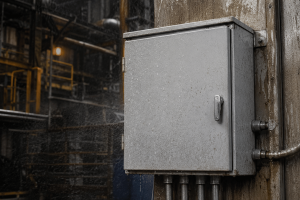
Telecom base stations in remote or harsh environments often face unstable grids and severe weather (heat, rain, dust). Cabinets here must offer strong durability and protection to keep networks running.
Features: IP65 rating (dustproof, rain-resistant), corrosion-resistant steel with UV coating, built-in heating for -30°C to 50°C operation. Widely used in outdoor base stations, supporting 8–12 hours of operation per outage.

4. Integrated Storage Cabinets: The “Plug-and-Play Expert” for Large Projects
For utility-scale projects (e.g., solar farms, hospitals, malls), traditional battery systems are complex and time-consuming to install. Integrated storage cabinets combine battery modules, inverters, cooling, and control systems into one pre-tested unit, requiring only wiring on-site.
Features: 50–200kWh per cabinet, 40% smaller footprint than traditional systems, scalable via parallel cabinets (e.g., 10 cabinets = 2MWh). Ideal for quick deployments—some projects finish 10-cabinet installation in just three days.

5. High-Density Modular Cabinets: The “Space Saver” for Limited Areas
In data centers and office buildings where space is expensive, high-density cabinets optimize layouts to store more energy in the same footprint.
Features: Energy density up to 200Wh/L (vs. ~120Wh/L in conventional cabinets). A 2m×0.8m×2.2m cabinet equals two standard cabinets and supports “on-demand expansion” by simply adding modules later.
II. Safe Installation: Three Steps to Avoid Hidden Risks
The quality of installation directly affects safety and service life. Neglecting details often leads to failures. Key points:
-
Choose the Right Environment
-
Clean & ventilated: dust-free, no corrosive gases, ≥0.5m clearance, avoid direct sunlight.
-
Proper temperature: 15–25°C (every +10°C shortens battery life by ~30%).
-
Moisture protection: waterproof flooring, away from pipes/sprinklers; dehumidifier if humidity >60%.
-
Comply with Standards
Battery cabinets must meet international and local standards.
-
International: IEC 62133 (battery safety), UL 9540 (storage system safety).
-
China: GB/T 36276 (Li-ion storage systems), GB 5135.1 (fire safety).
-
Special cases: High-rise buildings require fire approval; outdoor installations must follow lightning protection codes.
Suppliers should provide compliance test reports to avoid unqualified products.
-
Follow Standard Procedures
-
Power-off preparation: disconnect and verify no live current.
-
Cabinet fixation: anchor floor cabinets; mount wall units on load-bearing walls.
-
Wiring check: test voltage and resistance with a multimeter to avoid shorts or loose connections.
-
Power-on testing: start in “debug mode,” confirm BMS and cooling system operation, then switch to “normal mode.”
III. Daily Maintenance: Addressing Four Common Issues
Even with proper installation, minor issues may arise. Common examples:
| Issue | Cause | Solution |
|---|---|---|
| Capacity decline | Overcharging/discharging, high temp | Use BMS to check; replace if <80%; recalibrate BMS |
| Noisy cooling | Dusty fans, low coolant | Clean fans; refill coolant (verify model with supplier) |
| BMS alarm inactive | Loose cable, software fault | Check connections; restart/upgrade BMS |
| Leakage | Damaged insulation, poor grounding | Inspect insulation; ensure grounding ≤4Ω |
IV. Future Trends: How Battery Module Cabinets Will Improve
-
Smarter: AI + IoT for predictive maintenance, adaptive charging, and self-healing.
-
More Efficient: Liquid cooling becoming mainstream—compact versions and immersion cooling extending battery life.
-
Greener: Sustainable lifecycle—recyclable materials, battery recycling, low-carbon manufacturing.
-
More Integrated: Stronger smart grid integration—peak shaving, microgrids, and vehicle-to-grid (V2G) connectivity.

V. Conclusion: Choosing the Right Solution and Keeping Pace
From scenarios and installation to maintenance and future trends, practical application of battery module cabinets requires solutions that are both reliable today and adaptable tomorrow. KDST provides solutions for current needs (IP65 outdoor cabinets, high-density data center cabinets) and is also developing advanced products (AI-powered cabinets, immersion-cooled cabinets) to keep users aligned with future upgrades.
If you are unsure which cabinet suits your needs or want a customized plan, contact KDST’s professional team. They will provide tailored recommendations based on your power demand, installation environment, and budget—ensuring safe and efficient energy security.