The selection of the right housing type is extremely important in managing and protecting your gear. Two common choices are pole mount cabinets and wall mount cabinets, one type to suit specific needs, the other to suit certain kinds of environments. How can you establish which type of installation would best fall in line with your project? If you house outdoor networking equipment, telecommunications equipment, and various other mission-critical systems, the selection of a cabinet will have an impact on performance, durability, and sometimes costs. This article provides a comparison between pole mount and wall mount cabinets, detailing their unique specifications, as well as the potential benefits and perfect application environments. Slowly, you’ll have a nice image of which selection pattern meets your project’s requirements.
Understanding Mounting Options

What is a Pole-Mounted Cabinet?
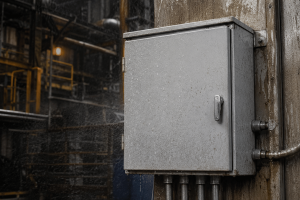
A pole-mounted cabinet generally refers to an enclosure or an outdoor cabinet attached securely to either a pole or poles. Cabinets are usually attached to poles using brackets or straps. Pole-mounted cabinets are used in many applications for keeping essential gadgets away from the intervening beasts of nature, including equipment of the telecommunications, network, or power systems. Reconsidered elevations on a pole provide an efficient way to cut down floor space for storage and keep equipment off the ground where exposure to many hazards, including extreme floods or damage from crumbling materials, is significantly controlled.
Weather-resilient pole-mounted enclosures make for a great choice in weather-challenged outdoor placement. A lot of these enclosures boast of solid build qualities supported by weather-resistant coatings safeguard them against elements like rain, wind, sunrise, UV rays, and variances in temperature. And with this feature of lock solutions in many pole-mount cabinets, a door panel system, ventilation systems, and protected cable access altogether ensure the protection of internal equipment against theft, damage from overheating, or other environmental attack.
Pole-mounted boxes are suitable for the most compact and hard-to-reach places, such as on the edges of roadways, urban jungles, or remote desolate locations. Since they are the tallest, they stay visible and connected-generally useful for mounting CCTV cameras, wireless modems, or any sensors. That combination might actually then make pole cabinets valuable to one infrastructure in particular-fusing value with opportunities for adaptation, this drew the making of cabinets for various convoluted designs.
What is a Wall Mount Cabinet?
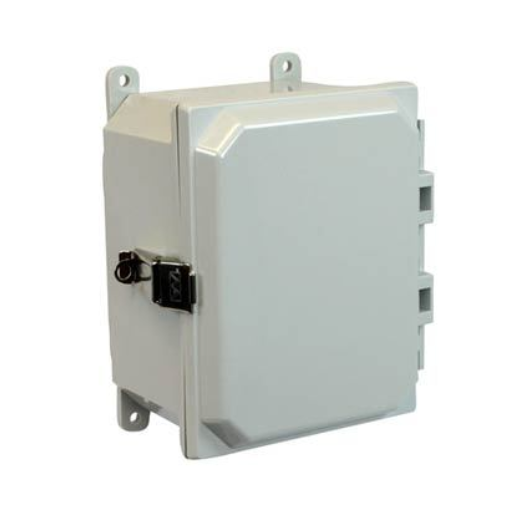
A wall-mount cabinet is an enclosed storage unit intended for secure wall attachment. Often good for premises so confined that floor space would require overly-accommodative construction, these cabinets usually serve the purpose of keeping electronics and networking gear shielded and the like. Their small design makes them ideal for reckoned sites where tidiness is of the essence-well, maybe office, server room or industrial site.
The idea is to mainly store valuable items properly, keep them off the ground, and shield them from damage without displacing anything or performing other things not typical. Most of these cabinets are provided with amenities, like locking doors, sliding rails, with adjustable provisions for extra stuff, and vented areas or active cooling-anything to help with airflow-hence promoting prolonged service.
Variably sized and structured wall-mounted cabinets cater to different usages. What they serve most are nothing compared to having some cages with which to house gadgets, whereas others are quite the opposite, able to accommodate lots of gear. All of them are inclined to be well-suited to applying to just about any application, be it a home office or on an enterprise. They all provide advantages that allow for keeping devices secure and efficient.
Key Differences Between Pole Mount and Wall Mount
Pole mount and wall mount have their distinct suitability for different installations and purposes. Pole mounts are generally intended for outdoor applications as they affix to poles or any similar structure. This feature makes them best fit for areas that are void of walls or flat surfaces–roads, parking lots, or areas known to a few–while wall mounts are typical indoor/sheltered environment designs so as to be faithfully attached to walls for the purpose of installation and accessibility.
By virtue of being hooked to poles, pole-mount stands are more flexible in terms of physical location and promenade in pole height placement as suits the pole’s structure. Therefore, the pole mount allows for a wider coverage and for more accurate optimization of outdoor variables such as light and camera viewing angles. Still, wall mounts provide little flexibility in placement, though single-mindedness is one advantage allowed by such unalterability; access to the cameras for maintenance is made easier for the corporations. They can also be installed in locations like line of sight, or generally anywhere with eyesight from big monitors.
Last but not least, the installation and durability requirements of both types vary significantly. To stand their ground against the elements of nature – including wind, rain, and temperature changes – pole mounts use heavy-duty materials and weatherproofing. While wall mounts do require durability, they are not as subject to harsh weather, so they concentrate on their ease of installation and aesthetic appeal. There are several factors that may influence the decision to opt for pole or wall mounts, including site limitations, application, and the specific nature of the installation site.
Advantages of Each Mounting Option

Benefits of Pole-Mounted Cabinets
Some key benefits of mounting cabinets to poles make them one of the best-suited options for their applications, yet again, conditioned by the need for durability and versatility. To begin with, the distance from the landline ensures that these pole-containers keep the equipment from water, crawling things, and dust or debris, thus securing the equipment put inside. Furthermore, something raised high enough aids in the transmission of signals and legibility, especially in telecommunication and monitoring.
Another important advantage of mounting cabinets to poles is their weather resistance. These cabins are incredibly durable through exceptional imperviousness to winds, rainfall, and temperature extremes, while also allowing for simple installation outdoors in areas where extreme weather or varying climatic conditions might be a cause of concrete problems.
Pole-mounted cabinets in conclusion allow space to be used more efficiently, which is particularly needed where it is not feasible to do ground-level installations. Thanks to the utilization of height structures, a preservative weighing concern for usable area is minimized, bringing in increased flexibility of choice in design decisions. Pole-mounted cabinets could be used with trust when being installed on small land areas, especially in urban settings. Most widely used in the deed of work related to anchoring foundation cases, the pole-mounted cabin forms a circumventible, compact, and durable solution to the problem statement of each establishment.
Advantages of Wall Mount Cabinets
Wall-mount cabinets are a convenient way to make use of an environment where floor space is limited. The installation of wall mounts provides ample floor space and makes them perfect for small offices, apartments, or any urban setting where space utilization is control. Their small sizes make location easy without disturbing the accessibility of utilities, thus maintaining neatness and a touch of organization.
An overwhelming aggravation is on their installation. The wall-mount cabinets are usually lightweight and are designed for ease in fixing, thus reducing the effort, time, and money needed for installation. Maintenance, be it now and then, is easy since it is well above the floor and so it is further from dirt, rubbish, and idlers’ hands or feet, of course prolonging its life.
Versatility and productivity are two other standout aspects of wall-mount cabinets. It’s a unit designed to protect fragile electronics, or it holds utilities and tools alike. Most come with a cable management system already built in while you change the settings to suit your type of provision with adjustable shelves. This adaptability means wall-mount cabinets can perform a multitude of tasks for different settings. These help to offer a general yet most resilient and efficient storage solution.
Comparative Analysis of Benefits
Way more space-efficient in terms of space use, wall-mount cabinets outweigh conventional shelving. Being permanently hung up while secured to the walls, they excise a lot of floor space so ideal for compact-fit areas or those areas that have provided maximal space usage. While traditional shelving still carries much more weight about storage places, the flexibility of choice does not favor them compared to wall-mount cabinets. Thus, wall-mouting alternatives suit dynamic or smaller-space purposes better.
Another plus point here is their organization-ensuring aspects. From adjustable shelves to hiding cable management systems, wall-mount cabinets cater to a wide variety of storage items, whether tools, electronics, or general things. In contrast to wallboard-shelved floors, this isn’t always the case; therefore, wall-mount cabinets offer a much more customizable aspect, especially for certain uses and thus enhance operability through such diversity.
Furthermore, wall-mounted cabinets generally provide better safeguarding for the items within. This is because the cabinets trap the items within a secure container and keep the dust, debris, or accident damage around them at bay, while traditional shelves expose materials leaving them at risk of abrasion or injury. Wall-mount cabinets protect sensitive and fragile equipment from physical damage and, thus, are a more reliable means of storage.
Factors to Consider When Choosing a Mount
1 Environmental Considerations for Outdoor Network Installations
In the design and installation of outdoor network equipment, environmental factors play an important role in guaranteeing prolonged durability, and stable operation. One of those is design for weather resistance. It is the producer’s job to plan for equipment that can handle extreme temperatures, heavy rains, heavy winds, and sunshine. Henceforward, the operator must preplan for installing IP stabilized enclosures that offer lasting protection for the components from contamination from moisture and dust.
Impact from wildlife or debris is a significant concern apart from system design for physical and environmental damage. Outdoor installations are typically exposed to animals, plants, and falling branches that can obstruct equipment function. Protective casings and mounted sturdy solutions could help ensure risk mitigation by preventing possible interferences. Equally important, making provisions for attaching equipment securely to its mounting helps prevent vibration, displacement, or damage during storms and other environmental forces.
Lastly, take into account the power conditions for the vicinity. Power surges and lightning strikes are two major threats placed on outdoor access points. The use of well-grounded or insulated PoE-capable power supplies could assure that the connection remains survivable. Selection of well-thought components and/or solutions that can work within the designed environment is of utmost importance to ensuring ultimate product performance, thereby reducing system downtime and guaranteeing the system’s useful life.
2 Space Availability and Layout Constraints
The question of pole or wall mount depends largely on the available installation space and project-specific environmental constraints. Pole mount cabinets are an intrinsic option for low wall/ground space. They are ideal in outdoor environments and particularly useful where infrastructure is lacking or tremendously distant; mounted on poles, they require no infrastructure.
Contrarily, the wall mount cabinet is good for indoor or semi-protected applications with sturdy walls. Wall mounts give added advantage of using vertical space efficiently, favoring these cabinets where floor space is limited. Wall mount automatically keeps equipment at practical access height for easy usability and maintenance purpose.
Thus, the preference between the two differs due to space constraints and plant operation needs. Outdoor, freely plainfield areas favor poles, which offer excellent utility deployment, whereas controlled indoor or sheltered spaces alternate with wall-mounted cabinets for reliable maintenance.
3 Specific Equipment Requirements for Each Setup
There are a number of common requirements for all pole-mounted setups which are weatherproofing them against harsh and unpredictable climates present in many outdoor environments—including rain, wind, and extreme temperatures. Enclosures must be robustly engineered to work outdoors, having UV resistance for weathering, materials that do not corrode, and effective sealing to prevent both the ingress of dust and moisture. Additionally, the operators need robustly designed brackets or clips to bolt the gear onto the pole and make it stable against strong winds or stormy weather conditions.
For the wall-mounted setup, the gear must consume minimal indoor or any other sheltered space. It should feature efficient ventilation in case the design mandates heat dissipation too. The equipment must optimize accessibility and allow quick and easy maintenance. As an absolute necessity for the indoor space, the enclosures must meet safety standards with regard to fire resistance in case of exposure to toxic gases, etc.
There are power considerations and connection considerations to take into account before forming the means of installation in different environmental specifics. The pole-mounted setups may rely on solar energy or cable connectivity suits, respectively, giving dependability in operation regularly when installed in an outdoor environment. The wall-mounted setups depend mainly on the internal energy system and, because of their connectivity, may in turn work with the site’s interior network. This is the way to ensure the full operation and meet the functional requirements of a predetermined site in either area.
Potential Drawbacks of Pole and Wall Mounts

Balancing Pros and Cons for Optimal Choice
While selecting cabinets, it is very important to consider the benefits and detriments of each option with regard to the best choice for your space. High-quality cabinets, the main advantage of high-quality cabinets is their durability and longevity as they can withstand regular use over time without hurting in appearance and functionality. Apart from this, quality cabinets offer better storage options and can be customized to suit specific needs and preferences. So, increasing the kitchen cupboard’s practical utility and attractiveness.
In the first place, a major setback would be the budgetary restrictions that often accompany the placement of high-quality cabinets. High-quality materials and custom designs always come with a higher price tag-one that sometimes falls out of reach of many. Yet another negative is that various systems can consume a lot of time, and sometimes they are very intricate in terms of coordination with the other systems, due to precise measurement requirements and complicate installation processes. This, in turn, raises labor costs and stretches the project timeline.
Based on the ranked criteria of durability, design-construction flexibility, cost, and ease of installation depending on the site context and constraints that need to be taken into account, you may eventually wish to base the decision-making process around careful planning combined with a realistic assessment of priorities that will determine an optimal balance yielding solutions that serve to achieve practically as well as aesthetically.
Long-Term Implications of Your Choice

Maintenance Considerations
Maintenance is a prime consideration when one has to choose between a pole mounting or a wall mounting cabinet for an outdoor telecom enclosure. That is why outdoor telecom enclosures that are place-mounted tend to be more easily accessible for maintenance purposes since they are placed high up and allow for very easy visual inspection. However, they can be more difficult to mend if the structure demands specific equipment, such as ladders or cherry pickers, which has to be taken up to the site, incurring more time and cost for maintenance.
However, at times, the wall-mounted enclosures that are also fixed at an elevation do not require the additional input to carry out such maintenance procedures because they usually can be easily and often checked and worked upon. They are in many cases easier to maintain upon their very numerous removals. Also, walled enclosures face much less severe external factors such as wind pressure or surface-bound debris, and this, in turn, considerably mitigates damage, if at all, from external elements earlier implied.
To make a wise decision, an appraisal of the specific site’s conditions and future requirements seems to be quite necessary. As much as it might present higher costs for maintenance, for an environment that is severely space-constrained or has hard ground conditions, the pole mount cabinet would become more appropriate, for example. On the other hand, a wall mount cabinet would like them to be the most suitable for a place where easy access and a high degree of minimal ongoing upkeep are emphasized.
Overall Efficiency in Network Setup
Users are expected to ponder over which one is indeed the best for outdoor telecom enclosures between pole mount cabinets and wall mount cabinets; a good choice should favor efficiency, utility, and immediate fitting into local conditions. So, in cases of limited space and rather rough ground areas, pole mount cabinets are a good way to go, as they utilize vertical structures to save the ground area. They prove to be the handiest anywhere when the ground installations are impractical or just prone to damage.
The same stretch is entirely true for wall-mount cabinets; one locates them at sites where accessibility and simplicity of maintenance are the greatest need. Easier to install, service, and maintain, they make the right choice, being easy for regular operational inspections or speedy modifications. Since these cabinets are an insightful choice if ground clearance is an issue, the location they save will ensure that the equipment is securely placed and guarded against likely intrusions or water damage.
The decision-making between pole mount and wall mount cabinets is most dependent upon environmental conditions and network operation priorities. Inspection of factors such as space availability, maintenance requirements, and potential environmental hazards will ensure a well-organized and efficient setup that meets both current and future needs.
Frequently Asked Questions (FAQ)
References
Telecommunications Design Guidelines and Performance
This document provides standards and considerations for mounting telecommunications equipment, including wall-mounted options.
Read more from the University of Connecticut
General Telecommunications Design Considerations
This guide discusses the placement and design of telecommunications rooms, including wall-mounted cabinets.
Read more from the University of Missouri System
Telecommunications Distribution Design Guide
This document outlines the use of wall-mounted cabinets and racks in various telecom setups.
Read more from Utah Valley University
Installation Specifications – Telecommunications
This guide provides installation guidelines for telecom equipment, including mounting options.
Read more from the University of Mississippi
Secure Your Network with Wall Mount and Pole Mount Cabinets