How to Choose an IP55 Outdoor Enclosure Cabinet for Your Next Project
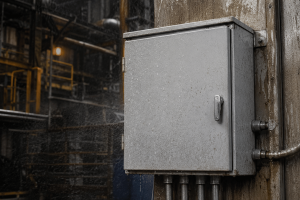
All outdoor electronics face enemies that are common around the world: rain, dust, temperature variations, and vandalism. Dust exclusion or water intrusion by a single unsealed opening can lead to corrosion of a circuit board or the suction of fine particles into a cooling fan — both are costly, yet easily avoided. That’s where ip55-rated enclosures come in. Here we outline what IP55 actually includes, how it relates to the nema system, which design elements mark a good cabinet from a cheap enclosure, and when IP65/66 may be appropriate. Whether choosing enclosures for telecom towers, solar farms, or automated manufacturing controls, the goal remains the same: the protection level should match the hazards you face.
What Does IP55 Actually Mean? Breaking Down the Rating

IP is a rating system developed by IEC 60529. Every IP rating consists of two digits. The first digit rates the level of protection against solid object contamination; the second digit gauges water intrusion protection level.
An ip55 rating specifically indicates the enclosure has a 5 in the first Digit (dust protection), and the second digit (water) is rated for 5 as well. The capabilities covered by the IP55 classification are for water jets from a nozzle, and some ingress of fine foreign material, but not enough to interfere with electronic components inside. Ingress protection is tested using a pressurized water nozzle with a 6.3 mm diameter, at 12.5 liters a minute, in all directions, for 3 minutes
For comparison, IP54 would only mean protection against spray, while IP56 would mean protection from more powerful water jets with a larger 12.5 mm nozzle. IP55 often makes an appropriate application for outdoor environments facing rain and dust storms, but not jet engines or ocean spray. The full rating details can be viewed in Wikipedia IP code.
| Digit | Solids (1st Digit) | Liquids (2nd Digit) |
|---|---|---|
| 0 | No protection | No protection |
| 1 | Objects > 50 mm | Vertical dripping |
| 2 | Objects > 12.5 mm | Dripping (15° tilt) |
| 3 | Objects > 2.5 mm | Spraying water |
| 4 | Objects > 1 mm | Splashing water |
| 5 | Dust-protected (limited) | Water jets (6.3 mm nozzle) |
| 6 | Dust-tight (complete) | Powerful water jets (12.5 mm) |
Knowing the IP55 rating of an IP55 outdoor enclosure is useful, because its exactly what the hardware has been tested for. An IP55 rating on a specification sheet tells you exactly what the enclosure protects against, and nothing else.
IP55 vs NEMA 3 — Are They Really the Same?

In the US, IP55-rated enclosures would sometimes show up with a nema 3 rating molded inside the standard label. It can be confusing when the same nema enclosure carries ratings under two different testing systems. The IEC defines IP ratings, while the NEMA 250 standard has its own protocols. Both tests cover similar areas, but each also includes unique features.
IP centers on water and dust ingress, while nema also tests further considerations. A nema 3 enclosure must be able to withstand freezing conditions, and still remain sealed. nema testing goes beyond, to include the effects of corrosion and gasket aging, so the enclosure still performs when exposed to freeze-thaw cycles. Therefore, a nema 3 enclosure will always meet a ip55 enclosure, but a ip55 enclosure is not guaranteed to satisfy a nema 3.
In reality, the majority of respectable manufacturers (KDST included) dual-rate their ip55 nema 3 enclosure lines to accommodate both standards. This saves customers the headache of having to convert between standards themselves. Refer to the nema comparison document for the official equivalencies between the two standards.
| Feature | IP55 | NEMA 3 | NEMA 4 (≈ IP66) |
|---|---|---|---|
| Standard | IEC 60529 | NEMA 250 | NEMA 250 |
| Dust Protection | Limited ingress | Yes (windblown) | Yes (windblown) |
| Rain / Sleet / Snow | Yes | Yes | Yes |
| Water Jets | Low-pressure | Not tested directly | Hose-directed |
| Corrosion Test | No | Yes | Yes |
| Ice Formation | No | Yes | Yes |
Always list both ratings when writing procurement specs for an international project (e.g., “nema 3 / ip55”) to minimize the potential for mixups between your U.S. engineering team and an overseas supplier. Having an outdoor enclosure by weatherproof rated to both is good insurance: auditors on both sides of the Atlantic will be happy.
Key Features to Look for in an IP55 Outdoor Enclosure

The IP rating gives you a reference as to what the enclosure was tested for in a lab environment. Actual outdoor operation will also consider construction details that can not be tallied on a 2 digit code. Use the below as a checklist to compare tough weatherproof enclosure options from various sources.
Ventilation and Thermal Management
A totally enclosed box will retain the heat. If working equipment (switches, PLC’s, inverters) is run inside – and no forced air circulation – then it is not unusual for internal temperatures to rise 20-30 C above ambient. A solution is the Filtered ventilation panels with ip55-rated fan trays drawing air through media which prevents dust entry but allows heat transfer.
Low-heat ventilation passive louvers will suffice for low loads but once approaching 200W then Fan assisted flow is advised. Ensure the ventilation system capacity is in line with your heat rejection requirements prior to ordering.
Tamper Resistance and Security Locks
Remote sites, cell towers, pump stations, roadside cabinets, etc., are susceptible to theft and sabotage. Watch out for enclosures with three-point security locking, the aperture for a padlock on the door handle, and tamper-evident security indicators. Some models have alarm contact switches affixed to the front and rear doors which activate when the doors are opened by unauthorized personnel.
Door Latches and Sealing
The latch arrangement controls how well the door seals against the gasket. Quarter-turn latches are often used on smaller enclosures. Multi-point latch arrangements on full-height cabinets can exert sealing pressure at three or more points along the door edge to give a continuous watertight seal.
Ensure gaskets are continuous (no spliced corners), EPDM or silicone rubber (check suitable temperature rating).
Cable Entry and Gland Plates
Any cable entering an enclosure box is a potential point of ingress. Pre-punched knockout plates allow you to open just the holes you require leaving all others factory sealed. For custom cable runs, removable gland plates with IP-rated cable glands ensure the integrity of the enclosure wherever the cables enter.
Bottom entry is recommended outdoors- water is easier to shed from the top, rather than sit on it, as it can with a top entry configuration.
Mounting Options
It will depend on your installation sites if you need wall mount brackets, pole mounting kit or loop mounting brackets for street side deployments, or a low profile mounting frame for ground level placement. Make sure you have the mounting plate and hardware either included or as accessories. A good manufacturer would have several mounting configurations for the same ip55 enclosure models. For 19-inch rack layouts, cage nut hardware and a removable bottom panel allow easy cabling access from below.
- ✔ Filtered ventilation rated to the same IP class as the enclosure body
- ✔ Multi-point latch system with EPDM or silicone gaskets
- ✔ Three-point lock with padlock provision for remote-site security
- ✔ Removable gland plates with IP-rated cable glands
- ✔ Wall mount, pole mount, and pad mount hardware available
Materials Matter — Metal, Stainless Steel, or Plastic?

The cabinet shell material influences: weight, corrosion life, cost and durability to UV. Using the wrong material in the wrong environment results in unwanted premature failure: a powder-coated mild steel enclosure at a coastal site would be used by the two year mark, as would a stainless steel in a warehouse hallway, forcing budget to be diluted unnecessarily. A comparison of the three main material families for outdoor usage in enclosure:
| Property | Mild Steel (Powder-Coated) | 304/316 Stainless | ABS / Polycarbonate |
|---|---|---|---|
| Weight | Medium | Heavy | Light |
| Corrosion Resistance | Good (with coating intact) | Excellent | Excellent |
| Cost | Low–Medium | High | Low |
| UV Resistance | Good | Excellent | Varies (needs UV stabilizer) |
| Best For | General outdoor use | Coastal sites, chemical plants | Junction boxes, small units |
We test powder coat adhesion per ASTM D3359 cross-hatch method before shipment. Any panel that fails the tape-pull test gets stripped and re-coated – it is cheaper to catch it in the factory than to replace a rusted rack cabinet in the field.
— KDST Engineering Team
In corrosive environments – chemical processing plants, waste water facilities, or sites near salt water – 316 stainless steel is the industry standard. In most outdoor applications in moderate weather conditions, powder-coated mild steel provides the best combination of economy and durability. Plastic enclosures are suitable for low-weight applications such as outdoor electrical junction boxes and fiber splice closures, but they do not have the rigidity to support full-size metal enclosure cabinets that contain heavy equipment in extreme temperatures. An abs plastic enclosure is a practical choice for a small waterproof outdoor junction box, but anything larger than 12U calls for steel. When the enclosure protects installed equipment that generates its own heat, factor in the thermal conductivity of the shell — steel dissipates warmth faster than plastic.
Where IP55 Outdoor Enclosures Get Deployed

The outdoor enclosure every hardware supplier uses as the baseline protection class for permanent equipment installations. Below are four application categories popular for outdoor use and the specific installation situation that makes them the obvious choice.
Common Deployment Scenarios
- Telecom – Fiber distribution hubs, 5G small cell cabinets, and roadside OLT enclosures. These sites are exposed to rain, road spray, and road debris but not pressurized washdown.
- Solar Energy – String inverter housings and combiner boxes at ground-mount farms. enclosures are located at module height in open fields, exposed to UV, wind-driven rain, and airborne sand in arid climates.
- Industrial Controls – PLC cabinets located near loading docks, pumping station controls, and outdoor variable frequency motor control stations. Dust from material movement as well as occasional rain are the primary concerns in outdoor settings.
- Transportation – Traffic signal controllers, EV charging station cabinets, and highway monitoring equipment. These electrical enclosure installations are subjected to extreme weather conditions – from snow and ice to peak summer heat cycling.
- Edge Computing – Outdoor server cabinets at cell tower bases and retail distribution hubs, where a 6U or 9U wall-mount enclosure holds network switches and edge processors in a waterproof outdoor housing.
A telecom provider in southeast Asia installed 200+ of our ip55 cabinets in roadside cell sites – after 18 months of monsoon seasons, not a single report of water ingress. The key was bottom-entry cable glands and checking that every latch connection was torqued to spec during installation.
— KDST Field Engineering
If you are specifying for a similar project, look through our complete line of ip55 and nema 3 outdoor cabinets for an ip55 rack or wall-mount model to fit your requirements.
Installation Best Practices for Outdoor Enclosures

Regardless of how well you build a weatherproof enclosure, it will not perform if installed improperly. These six procedures highlight the critical elements that will ensure the ip55 protection rating holds up and the equipment inside lasts.
6-Step Installation Checklist
- Site survey – Verify flood zone history, sun angle exposure, vehicle access space, and identity of high-heat zones (concrete walls, HVAC exhausts).
- Foundation and support – Torque anchor bolts to manufacturer specifications. Check pole clamp alignment with pole diameter and actual wind load capacity of pole-mount support.
- Cable entry – Use IP-rated cable glands on every penetration. Install blanking plugs in unused knockouts. Preference should be given to bottom- entry as it prevents collection of moisture.
- Grounding – Connect the enclosure body to the local earth bar according to NEC Article 250 or IEC 61439. Use listed earthing terminals, not self-tapping screws through side panels.
- Heat management – Do not situate the enclosure where reflected heat is prominent. Allow 100 mm clearance each side for free air movement.
- Labeling- Ensure the ip55 rating label remains after installation . Add equipment ID tags according to local electrical code.
Drilling extra holes without re-sealing in the field voids ip55 rating- we get called out to service calls on a daily basis. Additional cable entry points after installation should be sealed with IP-rated cable glands and a spray test performed to confirm the seal before energising. installation is easy if enough knockouts are ordered at the time of the order.
Dimensional drawings and mounted hardware details are available from the enclosure specs and mounting options page.
Is IP55 Enough? When to Upgrade to IP65 or IP66

The ip55 enclosure is designed to withstand the majority of outdoor environments but for some applications, a higher-rated enclosure is necessary. Use the table below to decide if your site environment warrants the increased added expense to upgrade.
| Scenario | IP55 | IP65 | IP66 |
|---|---|---|---|
| General outdoor (rain, snow, dust) | ✓ Sufficient | Overkill | Overkill |
| Complete dust exclusion needed | ✗ Upgrade | ✓ Recommended | ✓ |
| High-pressure washdown | ✗ Upgrade | ✗ Upgrade | ✓ Required |
| Coastal / salt spray | ✓ With SS material | ✓ | ✓ |
| Submersion risk | ✗ Need IP67 | ✗ Need IP67 | ✗ Need IP67 |
ip55 is adequate to cope with rain, snow and windblown dirt – the harsh environments found at outdoor telecom sites, solar farms and industrial yards. Upgrade to IP65 when it is necessary to keep out all sources of excessive dust. Such would be flour mills, cement works or saw mills where airborne particles could damage the electronics. Upgrade to IP66 if high-pressure washdown cleaning using a hose is part of the maintenance schedule, such as pharmaceutical clean rooms, marine vessel decks or food processing lines.
Transitioning from ip55 to IP66 adds 15-25% additional enclosure cost, attributable to increased gasket compression and higher tolerances in manufacturing. This cost can be justified when it is necessary for protection against water to be strong enough to endure a hose directed spray. For general outdoor environments, IP55 with a well-chosen material will be a suitable option at the lower project budget.
“We produce a real world IP-rating recommendations to help our customers choose appropriately rated enclosures for the operating environment, avoiding unneeded over-specification, while ensuring the enclosure isn’t a weak spot that will lead to project delays. Our design engineers advise each customer on the correct IP class and enclosure size.”
— KDST Sales Engineering
Check out the IEC IP ratings guide (PDF) for the full set of test data and third-party certification documents.
Frequently Asked Questions

Q: Is IP55 ok for outdoor use?
View Answer
Q: What is IP55 enclosure rating?
View Answer
Q: What is the IP rating of an outdoor enclosure?
View Answer
Q: Is the IP55 junction box suitable for outdoor use?
View Answer
Q: What is the difference between IP55 and NEMA 3?
View Answer
Q: Can I drill holes in an IP55 enclosure for extra cables?
View Answer
Q: How do I maintain the IP55 rating over time?
View Answer
To view the complete picture of the KDST ip55 outdoor cabinet line, review specifications, CAD drawings, and configurations,
Need a Custom IP55 Outdoor Enclosure for Your Project?
by KDST, to view our complete weatherproof cabinet product line – all custom sizes, cutouts, and matching colors.
About This Guide
We at KDST have been reliably producing weatherproof outdoor enclosure for the telecom and solar energy markets since 2012. The IP rating comparisons, material data, and installation guidelines in this article are based on the direct experience of our engineering staff from IEC 60529 testing and application of our products in the field throughout Asia, Middle East, and Latin America. This information has been compiled by KDST to support project engineers and procurement teams in choosing the appropriate level of protection and avoiding over- or under-specification.
References & Sources
- Ingress Protection (IP) Ratings — International Electrotechnical Commission (IEC)
- IEC 60529 IP Ratings Guide (PDF) — International Electrotechnical Commission (IEC)
- Comparison of nema 250 and IEC 60529 — National Electrical Manufacturers Association (nema)
- IP Code — Wikipedia
- Grounding requirements for services, NEC — EC&M