Electrical Control Cabinets in High-Temperature Environments: KDST's Engineering Breakthroughs and Full-Scenario Solutions
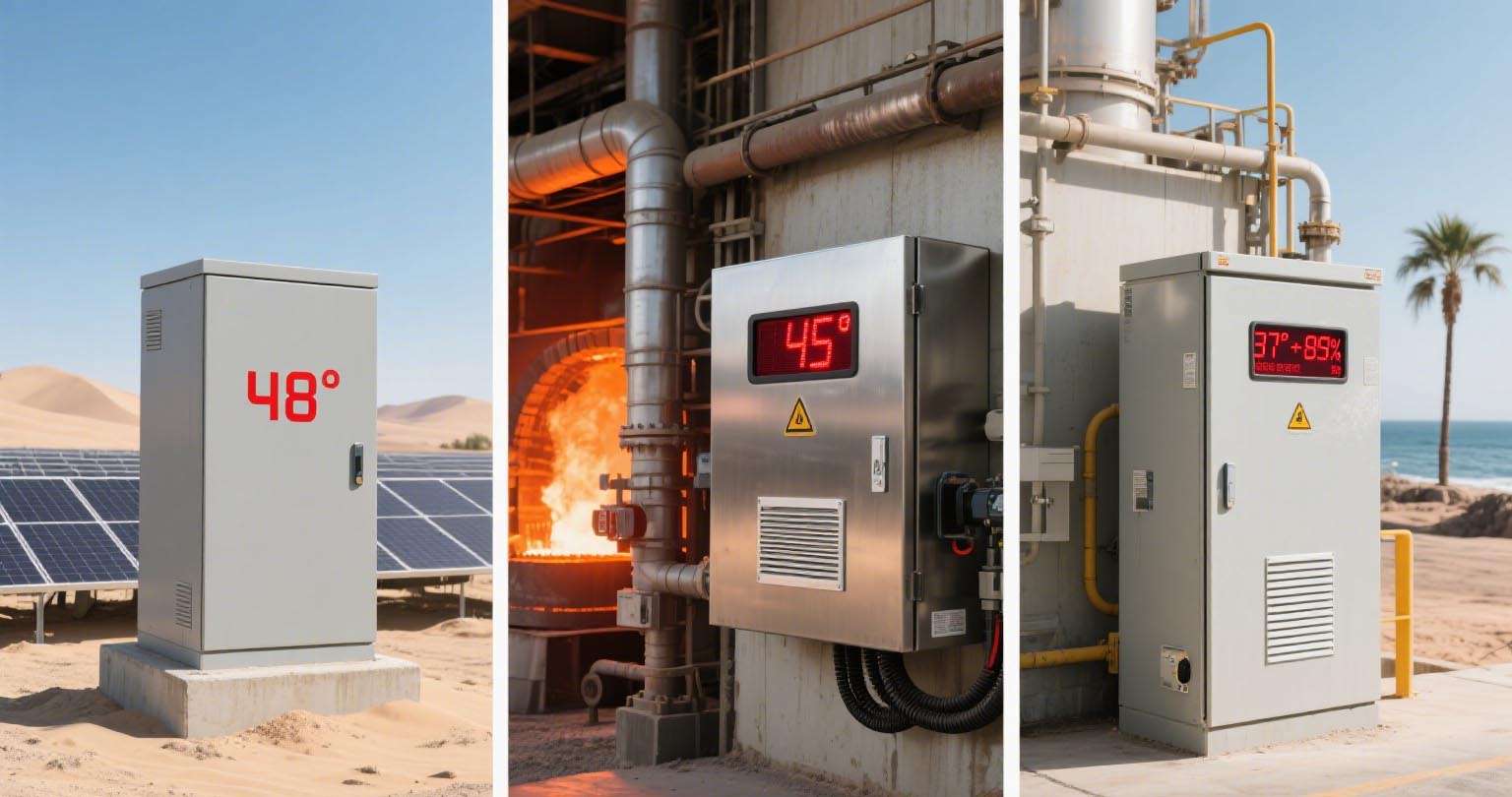
In high-temperature scenarios such as desert solar power plants, smelter workshops, and tropical coastal industrial zones (where ambient temperatures often exceed 40°C), the stable operation of electrical control cabinets faces severe challenges. As a leading global provider of electrical equipment solutions for extreme environments, KDST has over 10 years of in-depth industry experience. It has keenly observed that traditional control cabinets—plagued by insufficient material heat resistance, poor cooling system adaptability, and structural designs that ignore high-temperature characteristics—not only cause a more than 3x increase in the failure rate of core components like PLCs (Programmable Logic Controllers) and frequency converters but also lead to unplanned downtime losses of $5,000–$30,000 per hour. This article, combining KDST’s technological R&D and practical cases, analyzes the core challenges of high-temperature environments for electrical control cabinets and details KDST’s customized high-temperature-resistant solutions.
I. Four Core Threats of High-Temperature Environments: KDST’s In-Depth Insights from Practical Cases
Based on its service experience in typical high-temperature scenarios such as Middle Eastern deserts, Southeast Asian tropical factories, KDST has summarized four key impacts of high temperatures on electrical control cabinets, each supported by measured data:
1.1 “Cliff-Like” Reduction in Component Lifespan
Electrical components are far more temperature-sensitive than expected. KDST’s laboratory test data shows:
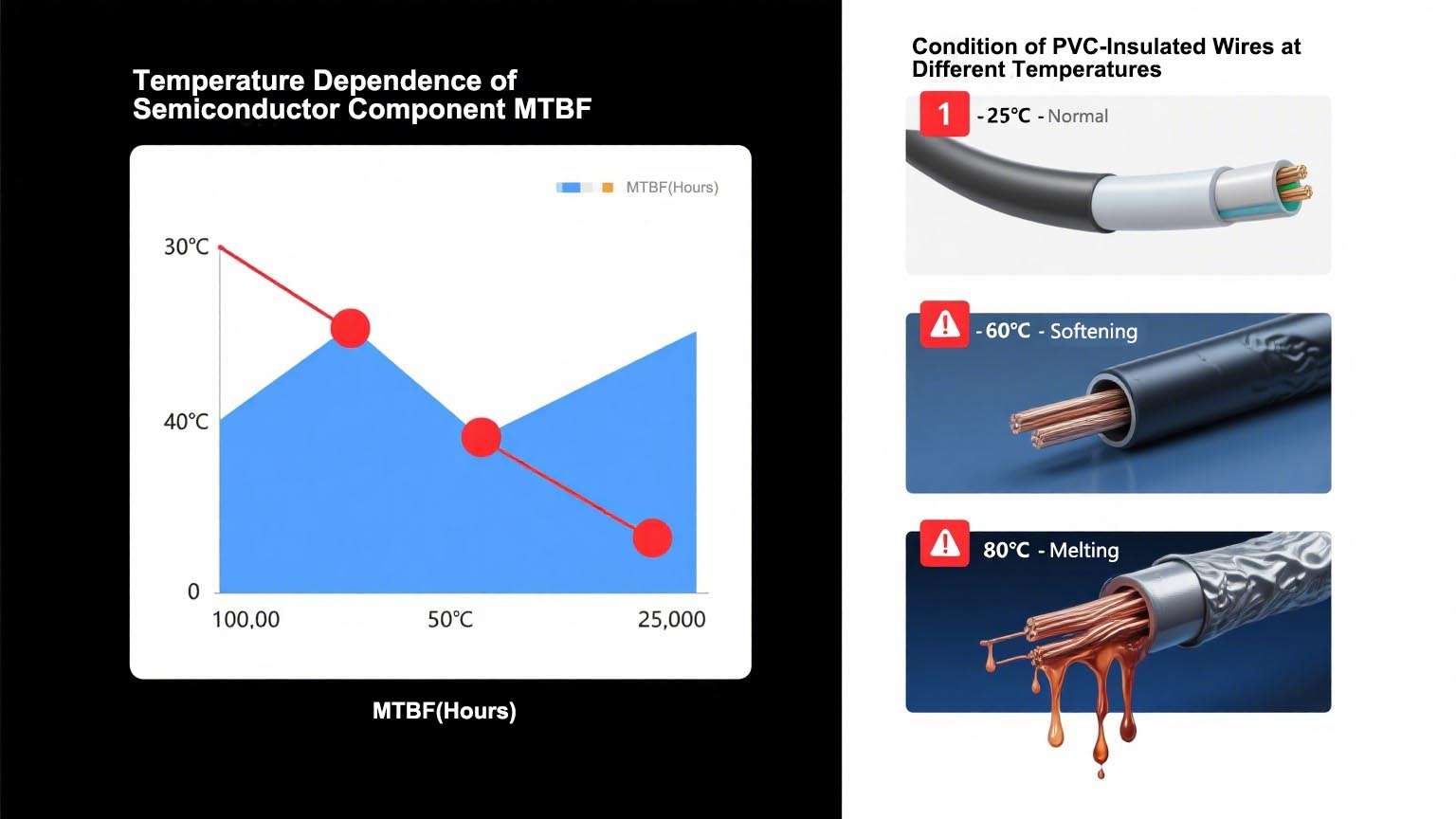
- Semiconductor Components: For PLC chips and inverter modules, when the operating temperature exceeds 35°C, their Mean Time Between Failures (MTBF) is halved for every 10°C increase. For example, a certain type of frequency converter has an MTBF of 100,000 hours at 30°C, but at a KDST Middle Eastern project site (with an average summer temperature of 50°C), its MTBF drops to only 22,000 hours without protective measures.
- Insulating and Mechanical Components: Traditional PVC (polyvinyl chloride) insulated wires soften at 60°C and melt at 80°C. KDST found in Southeast Asian projects that high temperatures accelerate the oxidation rate of silver alloy contacts in contactors by 2x, increasing contact resistance and causing localized overheating—raising the probability of “welding” failures (contacts failing to disconnect normally) to 30%.
1.2 Thermal Runaway Cycle in Enclosed Spaces
Control cabinets act as “thermal enclosures,” accumulating both waste heat from internal components (e.g., a 5.5kW inverter generates approximately 150W of waste heat per hour) and external radiant heat (when outdoor cabinets are exposed to direct sunlight, their surface temperature is 25–30°C higher than the ambient temperature). KDST’s measurements at a Saudi Arabian solar power plant show that control cabinets without KDST’s solutions can reach an internal temperature of 78°C on summer afternoons, forming a runaway cycle of “high temperature → reduced component efficiency → increased waste heat → higher temperature,” leading to an average of 1.5 inverter shutdowns per day.

1.3 Condensation Risks Under High Temperature and Humidity
High temperatures are often accompanied by high humidity (e.g., annual humidity of over 85% in Southeast Asian coastal factories). KDST’s technical team found that when the day-night temperature difference exceeds 20°C (e.g., 65°C during the day and 30°C at night), warm and humid air inside the cabinet condenses into water droplets on the surface of low-temperature components (i.e., condensation). This causes two major problems: first, the corrosion rate of metal terminals accelerates by 3x; second, conductive paths form on circuit boards, increasing the failure rate of sensor modules by 70%. A coastal power plant in Indonesia once had to replace 12 temperature sensors monthly due to condensation issues, leading to a sharp increase in maintenance costs.
1.4 “Failure” of Traditional Cooling Systems
KDST’s adaptability tests on mainstream cooling methods in the market show that traditional solutions have obvious shortcomings in high-temperature environments:
- Fixed-Speed Fans: Above 45°C, air volume decreases by 50%. Moreover, due to dust clogging (high-temperature scenarios are often dusty), weekly cleaning is required; otherwise, the internal temperature of the cabinet will rise by an additional 8–10°C.
- Standard Air Conditioners: Most commercial products have a maximum applicable temperature of only 43°C. At a KDST African mining project (with an average daily temperature of 48°C), standard air conditioners shut down for an average of 4 hours per day, completely losing their cooling function.
- Passive Ventilation: Relying solely on the natural rise of hot air for heat dissipation, its efficiency drops sharply in still, high-temperature air. KDST’s measurements show that it can only reduce the internal temperature of the cabinet by 3–5°C, far failing to meet the requirements of components (which need 20–35°C).

II. KDST’s High-Temperature-Resistant Control Cabinet Solutions: Triple Breakthroughs in Materials, Cooling, and Structure
Targeting the uniqueness of high-temperature environments, KDST abandons “one-size-fits-all” designs and focuses on “customization,” creating solutions from three dimensions: material selection, cooling systems, and structural optimization. All technologies have been verified in high-temperature projects across multiple regions, reducing the average failure rate by 82%.
2.1 Material Selection: Blocking Heat Invasion from the Source
Based on different high-temperature scenarios (dry heat/humid heat/high-temperature and dusty), KDST has developed exclusive material combinations to achieve the triple characteristics of “heat insulation, durability, and corrosion resistance”:
- Main Materials:
- 5052 Anodized Aluminum Alloy: Designed specifically for dry-heat scenarios (e.g., Middle Eastern deserts), it has a low thermal conductivity of only 130 W/(m·K) (1/3 that of ordinary steel). The 15μm-thick anodized surface has a solar reflectance of over 80%, reducing sunlight absorption by 60%. KDST’s comparative tests at Saudi Arabian projects show that aluminum alloy cabinets of the same size have an internal temperature 12°C lower than that of steel cabinets.
- GRP (Glass Fiber-Reinforced Plastic): Suitable for humid-heat and high-temperature corrosive scenarios (e.g., coastal factories, chemical plants), it has a wide temperature resistance range of -60°C to 120°C and an ultra-low thermal conductivity of 0.3 W/(m·K) (1/150 that of steel). It is also resistant to salt spray corrosion, extending component lifespan to 8–10 years. After adopting this material in a coastal project in Indonesia, KDST achieved no cabinet rust for 3 years, and the sensor replacement frequency dropped from 12 units per month to 1 unit per quarter.
- Insulation and Sealing Materials:
- The double-layer cabinet is filled with 50–80mm high-density polyurethane foam (thermal conductivity ≤0.024 W/(m·K)), which has 40% better insulation performance than traditional rock wool and reduces external heat penetration by 50%.
- EPDM (Ethylene Propylene Diene Monomer) sealing strips are used, with a temperature resistance range of -50°C to 150°C and a compression rebound rate of ≥80%. They maintain sealing performance for a long time, preventing the intrusion of humid and hot air. In a tropical factory project in Thailand, the internal humidity of the cabinet was stably controlled at 40%–55%.
2.2 Intelligent Cooling Systems: On-Demand Regulation for High-Temperature Scenarios
KDST has developed a “graded cooling” system that automatically switches cooling modes based on the internal heat load of the cabinet (≤300W/>300W) and ambient temperature, saving 40%–60% more energy than traditional solutions:
Low-to-Medium Heat Load (≤300W): Passive + Hybrid Cooling
- Heat Pipe-Fin Radiator Combination: KDST’s customized heat pipes (filled with acetone phase-change fluid) have a thermal conductivity 1,000x that of metal. Combined with external fin radiators, they achieve zero-energy heat dissipation. In a food factory project in Malaysia (with an average daily temperature of 42°C), the internal temperature of the cabinet was stably maintained at 32°C without any power consumption.
- Variable-Speed EC Fans: Equipped with KDST’s self-developed temperature control chip, the fan speed increases by 10% for every 2°C temperature rise, consuming only 50% of the energy of fixed-speed fans. Combined with 100-mesh stainless steel filters + HEPA high-efficiency dust filters, the dust-proof effect reaches 98%, extending the cleaning cycle from 1 week to 6 months. This reduced maintenance working hours by 80% at an African mining project.
High Heat Load (>300W): High-Temperature-Specific Active Cooling
- KDST High-Temperature Air Conditioners: Designed specifically for environments above 55°C, they use R410A high-temperature-resistant refrigerant and are equipped with a “hot gas bypass” protection function to prevent compressor damage from overheating. In a Middle Eastern oil refinery project (with a summer peak temperature of 58°C), the air conditioners operated for an average of 22 hours per day, maintaining the internal cabinet temperature at 30±2°C with an uptime of 99.8%.
- Closed-Loop Heat Exchangers: Suitable for high-temperature, dusty/corrosive scenarios, they transfer heat through a closed loop without mixing internal and external air. After adopting this equipment in an Australian mining project, KDST not only reduced dust intrusion by 70% but also saved 30% more energy than standard air conditioners, cutting annual electricity costs by approximately $12,000.
2.3 Structural and Layout Optimization: Enhancing Heat Dissipation and Condensation Prevention
KDST optimizes high-temperature resistance by focusing on structural design details:
- Condensation Prevention Design: Equipped with KDST’s intelligent dehumidification module (using molecular sieve desiccants) to automatically control the internal cabinet humidity below 50%. Combined with pressure balance valves, it balances air pressure changes caused by day-night temperature differences to prevent moisture intrusion. After adopting this design in a coastal project in Vietnam, condensation-related failures dropped from 8 cases per month to 0.
- Component Layout: Follows the principle of “heat-generating components on top, sensitive components below”—heat-generating components such as inverters and power supplies are installed at the top of the cabinet (close to the heat dissipation outlet) with a 50–100mm gap to prevent hotspots. Sensitive components such as PLCs and sensors are installed in the lower 1/3 of the cabinet (where the temperature is 5–8°C lower) and equipped with aluminum heat shields to block radiant heat from upper components.
- Airflow Optimization: The bottom air inlets are designed with a 45° inclination to reduce dust accumulation; the top air outlets and fans form a “bottom-in, top-out” airflow channel, improving heat exchange efficiency by 20%. Measurements at an Indian steel mill project show that this optimization reduced fan operating hours by 1/4.
KDST Full-Lifecycle Services: Support from Design to Maintenance
Beyond hardware solutions, KDST has built a full-lifecycle service system covering “