
What equipment is generally installed in an outdoor communication cabinet?

I. Core Communication Equipment: The “Central Unit” for Signal Transmission and Processing
1.Wireless Communication Base Station Equipment (Mainstream in 5G/4G Scenarios)
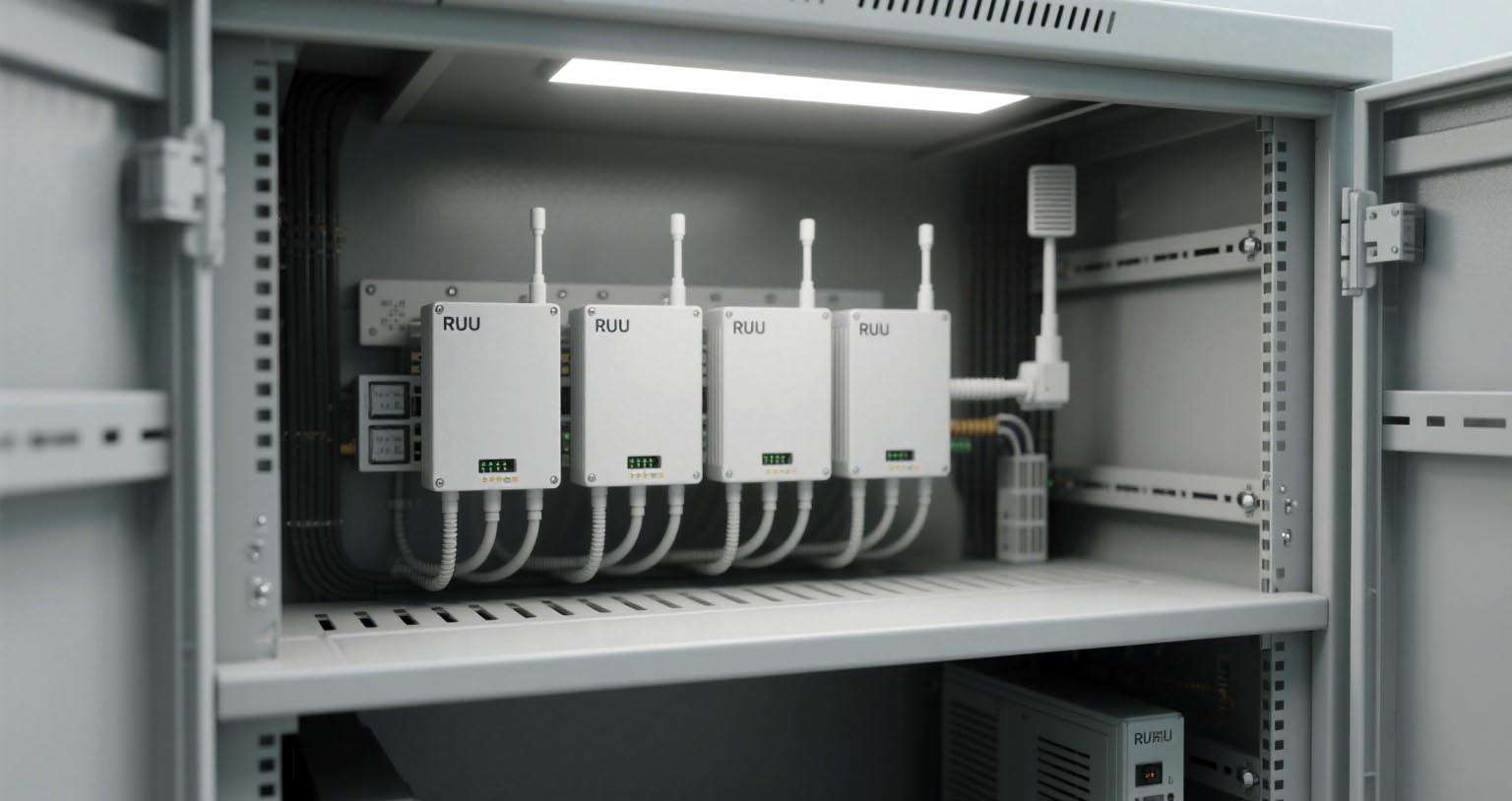
- RRU (Remote Radio Unit): The most core wireless signal processing equipment. Its function is to convert the baseband signals transmitted by the BBU (Base Band Unit, which is externally hung outside the cabinet in some scenarios) into radio – frequency signals, and send them to user terminals (mobile phones, Internet of Things devices) through feeder cables connected to antennas. At the same time, it receives terminal signals and returns them to the BBU.
Technical parameters: Supports multiple frequency bands (n41/n78/n79 of 5G, FDD – LTE of 4G, etc.), the protection level reaches IP65/IP67, the operating temperature range is – 40°C to + 55°C. High – end models integrate Massive MIMO technology, which can increase the signal coverage density and peak rate (the maximum supports a downlink rate of 2.6Gbps).
Installation location: It is mostly fixed on the upper layer inside the cabinet, leaving feeder cable interfaces and heat – dissipation space. In some small – sized cabinets, the RRU and the antenna are integrated designed to reduce signal loss.
2.Broadband Access Equipment (Home/Enterprise Broadband Scenarios)
- OLT (Optical Line Terminal) remote unit:
A key device for the “last mile” of fiber – optic broadband. After receiving the optical signals from the operator’s core network, it distributes the signals to the ONU (Optical Network Unit, optical modem) at the user end through an optical splitter, and at the same time converges the user’s upstream data and returns it to the core network.
- Core characteristics:
Supports GPON/EPON technology. A single device can provide 8 – 32 PON ports and access 512 – 2048 users. It has remote O&M management functions (it can monitor port status in real – time, restart faulty equipment, and issue configurations), and the operating power consumption is about 30 – 80W.
DSLAM (Digital Subscriber Line Access Multiplexer): An access device for traditional ADSL/VDSL broadband. It separates voice and data signals through telephone lines to realize broadband data transmission. At present, it is only used in old residential areas, rural areas and other areas not covered by fiber – optics, and is gradually being replaced by OLT.
3.Internet of Things Gateway Equipment (Smart Internet of Things Scenarios)
With the popularization of Internet of Things applications, some outdoor cabinets will be equipped with IoT gateways. The core functions include:
- Multi – protocol access: Supports protocols such as LoRa, NB – IoT, 4G Cat.1, and WiFi, and can connect various Internet of Things terminals such as smart electricity meters, environmental sensors, and cameras (a single gateway can access at most more than 200 terminals).
- Local data processing: Filters invalid data, formats conversion (for example, converts the binary data of sensors into JSON format), and reduces the amount of data transmitted to the cloud (reduces the bandwidth occupation by 30% – 50%).
- Remote device management: Supports firmware OTA upgrades, fault diagnosis (such as terminal offline alarms), and ensures the long – term stable operation of Internet of Things terminals.
Typical applications: Smart street – light control cabinets, urban environmental monitoring cabinets, and industrial park equipment monitoring cabinets.

II. Power Supply Equipment: The “Energy System” for Sustaining Continuous Equipment Operation
1.AC Distribution Unit
- Core function: Distributes the 220V/380V mains power introduced from the outside, provides independent AC power for equipment such as RRU, OLT, and air – conditioners. At the same time, it has overload and short – circuit protection (realized through 10A/16A air – switches).
Structural design: It contains 1 – 2 mains – power input interfaces and 4 – 8 output sockets (national standard/industrial sockets). Some models integrate a voltage – monitoring module, and display the input/output voltage through an LCD screen (accuracy ± 1V), which is convenient for operation and maintenance personnel to troubleshoot power failures.
2.DC Power Supply System (Special – purpose Power Supply for Communication Equipment)
- Rectifier module: Converts the AC mains power into a – 48V DC power supply, which is the standard for communication equipment. It has the functions of voltage stabilization (output voltage fluctuation ≤ ± 0.5V) and current stabilization. The output current of a single module is 50A/100A, and it supports multi – module parallel connection (up to 6 modules) to meet the power – supply requirements of high – power equipment (for example, the maximum power of RRU can reach 300W).
- Battery pack: As a backup power supply, it automatically switches the power supply when the mains power fails to ensure the continuous operation of core equipment. The common configuration is a 48V/100Ah – 500Ah gel battery (resistant to high and low temperatures, operating at – 20°C to + 60°C). The battery life is calculated according to the equipment power consumption (for example, a 100W device with a 48V/200Ah battery can last for 96 hours).
Special design: In some cabinets, an independent thermal – insulation cabin is designed for the battery, with a built – in heating sheet (it starts automatically at low temperatures) to avoid the battery capacity attenuation caused by low temperatures (the capacity retention rate is ≥ 80% at – 20°C).
3.Solar Power – supply Module (Remote Scenarios without Mains Power)
- In mountainous areas, deserts, islands and other areas not covered by mains power, outdoor cabinets are equipped with solar – power supply systems, including:
Solar panel: The power of a single panel is 300W – 500W, which is installed on the top of the cabinet or the surrounding brackets, with a conversion efficiency of 18% – 22% (monocrystalline silicon material). - PV controller: Adjusts the output voltage of the solar panel (12V/24V/48V self – adaptive), and prevents the battery from over – charging (charging voltage ≤ 56V) and over – discharging (discharging voltage ≥ 42V).
- Energy – storage battery: Shares the battery with the DC power – supply system, stores solar electrical energy, and ensures power supply at night/on cloudy days (with 2 pieces of 500W solar panels, it can meet the all – day power – supply of a 100W device).

III. Environmental Control Equipment: The “Regulating Unit” for Ensuring a Suitable Operating Environment for Equipment
1.Heat – dissipation Equipment: Solving the Equipment Heating Problem
Axial – flow fan/heat – dissipation fan: Suitable for medium – and low – heat – generating scenarios (such as broadband – access cabinets, with a total power consumption ≤ 300W). Through 2 – 4 fans, it forms an air convection (air volume 100 – 200m³/h) to discharge the hot air out of the cabinet. It has temperature – linkage control (starts at 40°C and stops at 30°C), and the power consumption is only 5 – 15W per unit.
- Air – conditioning module: Special for high – heat – generating scenarios (such as 5G RRU cabinets, with a total power consumption ≥ 500W). It adopts a compressor for refrigeration, with a refrigeration capacity of 500W – 2000W, and supports constant – temperature control (set at 25°C – 30°C, with a temperature difference of ± 2°C). Some models have a heating function (starts below – 20°C, with a heating power of 300 – 500W) to ensure the normal start – up of equipment in low – temperature environments.
- Heat exchanger: The first choice in sandy/high – humidity areas (deserts, coasts). It uses the temperature difference inside and outside the cabinet for heat exchange (the heat – exchange efficiency is 60% – 80%), and there is no need to introduce outside air, avoiding the entry of sand and moisture. The power consumption is about 30 – 80W, lower than the air – conditioning module (energy – saving 40% – 60%), but the heat – dissipation capacity is limited, suitable for cabinets with a total power consumption ≤ 400W.
2.Dehumidification and Dust – proof Equipment: Coping with Humidity and Sand Problems
- Dehumidifier: Necessary in high – humidity areas (the plum – rain season in the south, the coast). It dehumidifies by condensation or adsorption, with a daily dehumidification capacity of 0.5 – 2L, and is linked with temperature and humidity sensors (starts when the humidity ≥ 85% and stops when ≤ 70%) to prevent condensation inside the cabinet from causing equipment short – circuit.
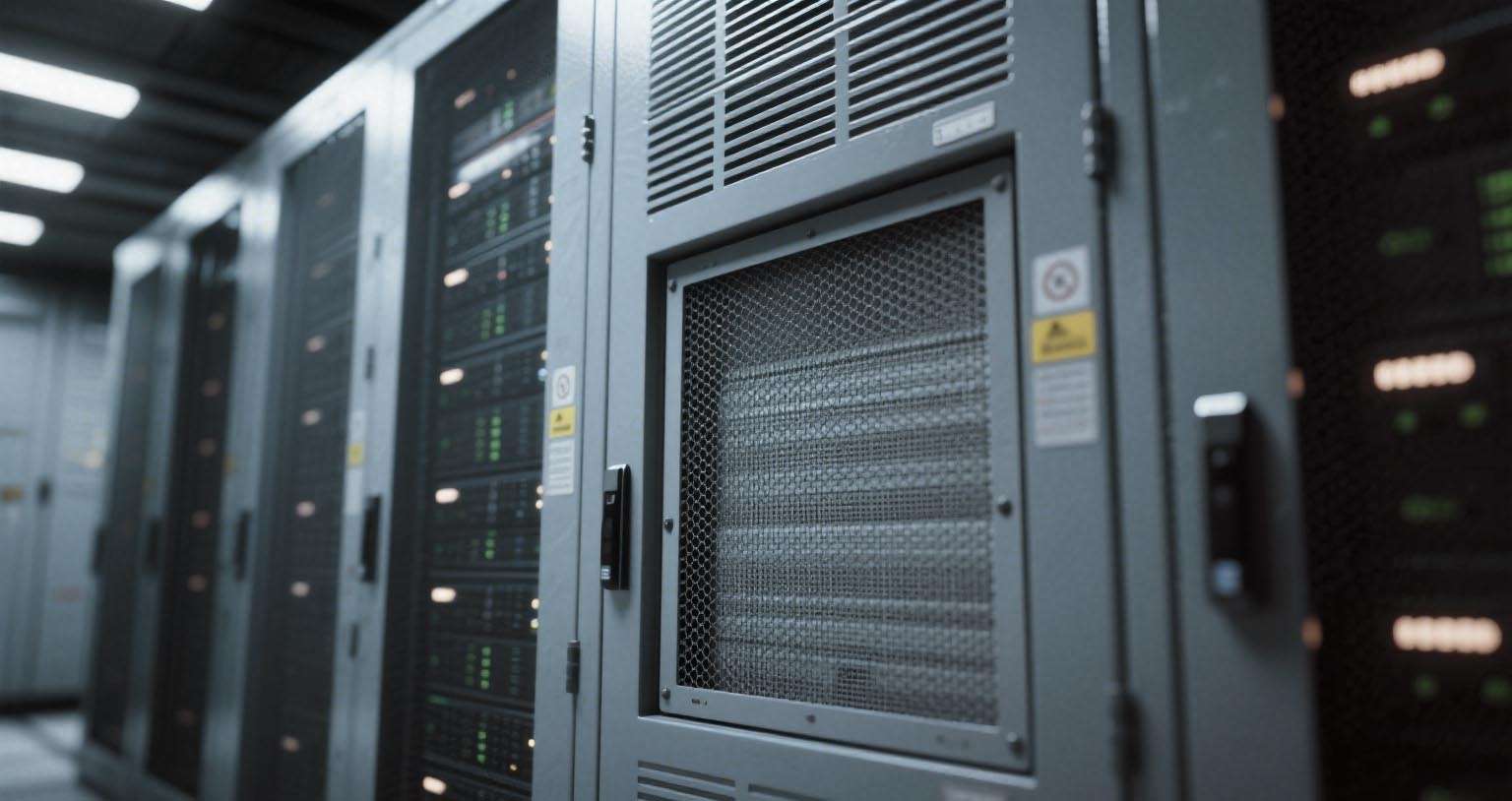
- Dust – proof filter: Installed at the air inlet of the cabinet, it is divided into primary – effect (filters particles ≥ 5μm, with a service life of 3 months) and medium – effect (filters particles ≥ 1μm, with a service life of 6 months). High – end cabinets adopt HEPA filters (filters particles ≥ 0.3μm, suitable for areas around hospitals, industrial dust areas), and need to be replaced regularly to ensure heat – dissipation efficiency.
IV. Monitoring and Protection Equipment: The “Protection Unit” for Ensuring the Safe Operation of Cabinets
1.Environment and Equipment Monitoring Unit (SCU/MCU)
- Core function: It collects the temperature (accuracy ± 1°C), humidity (accuracy ± 5%RH), smoke, and access – control status inside the cabinet through built – in sensors. At the same time, it collects the voltage (- 48V DC), current, and operating status (such as whether the RRU is online) of core equipment. The data is uploaded to the remote operation and maintenance platform (such as the operator’s power environment monitoring system) through 4G/fiber – optics.
- Alarm mechanism: When an abnormality occurs, it triggers an audible and visual alarm (the cabinet is equipped with a buzzer + red indicator light). At the same time, it sends text messages/platform push notifications to operation and maintenance personnel (response time ≤ 10 seconds), and supports remote control (such as restarting the air – conditioner, cutting off the power of faulty equipment).
2.Physical Protection Equipment: Anti – Theft and Anti – Lightning
- Anti – theft lock and access – control: The cabinet door adopts an anti – prying cross – lock/electronic combination lock (supports password/IC card unlocking). Some high – end cabinets have an access – control record function (stores nearly 1000 unlocking records); The bottom of the cabinet is fixed to the ground by 4 – 6 expansion bolts to prevent overall removal.
- Lightning – protection and grounding module: Contains a three – level lightning protector (power – supply lightning protection: 220V/380V AC, signal lightning protection: feeder cable/network cable interface), the grounding resistance ≤ 4Ω, conducts the lightning – strike current into the ground (the maximum current – discharging capacity is 20kA), and protects the equipment from lightning – strike damage; The cabinet shell is grounded separately to prevent static – electricity accumulation (the static – electricity voltage ≤ 100V).

3.Fire – fighting Equipment (Configured in Special Scenarios)
In cabinets in high – temperature and flammable environments (around gas stations, forest areas), it is necessary to configure:
- Aerosol fire – extinguishing device: Small in size (diameter 50mm, length 200mm). When there is a fire, it automatically releases aerosol (the fire – extinguishing time ≤ 30 seconds), and there is no liquid/powder residue, avoiding damage to the equipment.
- Temperature – fusing fire – damper: Installed at the ventilation opening of the cabinet. When the temperature ≥ 100°C, it automatically closes to prevent external flames from entering the cabinet.


