
It is quite a challenge to maintain outdoor telecom enclosures working at their best, particularly when heat has to be controlled. The operation of delicate electronics under severe environmental conditions requires the use of a superior thermal management scheme in the first instance. This comprehensive guide outlines engineering best practices for thermal management, illustrating those with innovative solutions and practical strategies to deal with overheating, condensation, and other thermal-related issues. If you are a telecom engineer or just a curious person wondering how technology survives the elements, this guide will give you the key insights to protect your infrastructure from the heat.
Understanding Thermal Management for Telecom Cabinets

Importance of Thermal Management in Outdoor Telecom Cabinets
Thermal management is one of the main features that must be considered when constructing or planning outdoor telecom cabinets. It is vital for outdoor cabinets because they contain sensitive electronic equipment that has to work under the most different environmental conditions. The most extreme environmental conditions can cause the equipment to malfunction, thus reducing the performance or even causing permanent damage, which will then be reflected on the stability and reliability of the communication networks. The correct management of heat ensures that temperature-sensitive parts are kept in their optimal operating range which will prolong their functionality and life span.
The absence of proper thermal management can lead to heat build-up which can further increase the rate of aging of internal components like batteries, circuit boards, and processors. Eventually, this will incur maintenance costs, more downtime, and an overall decrease in the telecom system’s efficiency. Moreover, the uncontrolled humidity in the interior can result in condensation, which rots or shorts out the electrical circuits. Effective thermal management systems are the solution to these problems since they create an internal environment with stable conditions.
Thermal management solutions should go hand in hand with energy efficiency and dependable performance. Among the different methods, passive and active cooling as well as insulation barriers are some that can be used to respond to the different environmental conditions. It is not only about protecting the equipment as a consequence of the optimization of energy use and reduction of strains but these methods also lead to the operations being more environmentally friendly. In the end, the right kind of thermal management is an assurance for the reliability and efficiency of the critical telecom infrastructure.
🔧 Key Components of a Telecom Cabinet
⚡ Power Systems
Uninterruptible power supply ensures constant delivery of power to prevent outages and maintain equipment operation.
❄️ HVAC Systems
Heating-ventilation-and-air-conditioning cools or heats equipment to keep it at desired temperatures.
🌐 Network Equipment
Routers, switches, and servers carry out communication and data transmission effectively through networks.
🔌 Cable Management
Organization and protection of cables for connectivity, enhancing ventilation and simplifying maintenance.
🛡️ Environmental Protection
Weatherproof enclosures, dust protection, and water ingress prevention to prolong equipment life.
📊 Mounting Systems
Shelves or racks that firmly support equipment and provide quick access for technicians.
Overview of Heat Load and Internal Temperature
The efficient handling of heat load and internal temperature is vital to the smooth operation and lifetime of telecom equipment. Heat load denotes the quantity of heat produced inside an enclosure as a result of the operation of electronic parts, while internal temperature is the total temperature inside the enclosure. The presence of excess heat may cause overheating, which in turn can ruin the components and lower the efficiency of the whole process.
The telecom enclosures have incorporated thermal management systems designed to cater to these problems. Amongst the features that help play the role of cooling are ventilation, heat exchangers, and cooling units that together help in controlling the internal temperature by letting the heat escape. The right airflow patterns in the enclosure are also as important, as they prevent the formation of hot areas and ensure that the temperature is equal all around. These actions have a significant effect on the dependability of telecom systems even when the demand is very high or the outside conditions are very extreme.
Controlling and monitoring the temperature is equally important to avoid unnecessarily prolonged downtime. To keep an eye on the internal conditions throughout the day, advanced temperature sensors are very likely to be installed for that purpose and to give an alert if a certain area is experiencing more heat than usual. The proper aides for these systems are through regular upkeep, as this not only prevents the systems from failing but also makes up for any potential damage due to the electronic parts being overheated for extended periods. Through the implementation of careful temperature management practices, telecom infrastructures never encounter disruptions and are always efficient.
Cooling Solutions for Optimal Performance

Passive Cooling Techniques
Active cooling methods are not used with the telecom infrastructure to keep the temperature optimum instead passive cooling techniques are the ones that serve the purpose. Typically, these methods use natural processes like ventilation, heat dispersal, and thermal insulation to maintain the proper system temperature. Passive cooling adopted would mean that the system will be running and still will be eating up less power and causing less harm to the environment.
Natural ventilation is one of the most commonly used passive cooling techniques and it consists of allowing airflow through exhaust vents or openings that have been strategically positioned. The air flow that results from this process dissipates heat naturally and thus prevents the overheating of enclosed areas such as data centers or equipment cabinets. The proper design and placement of vents not only gets the heat out but also manages and locates the temperature efficiently even in hot climates.
The insulation of thermal and reflective materials approaches is another crucial one. The insulated enclosures are built so that their heat absorption from outside sources is very limited and thus the inner temperatures are kept cool. Moreover, the use of reflective coatings or surfaces has a dual advantage – it not only repels sunlight but also reduces the amount of heat coming in thereby safeguarding the telecom equipment from getting too hot. All these techniques coupled with regular monitoring make passive cooling a reliable and sustainable solution.
Active Cooling Methods
Active cooling methods entail the use of mechanical systems that manage the temperature inside the outdoor telecom enclosures to avoid overheating. Commonly used systems are air conditioning units, fans, and heat exchangers. Among these, air conditioning is the solution that offers the most effectiveness as an active cooling solution since it not only cools the air inside but also maintains the cooled air at specific and constant levels throughout the process. Another widely used method is that of Fans, which are used to circulate air during the cooling process thus preventing the formation of hot spots and contributing to a more uniform temperature distribution.
Heat exchangers also play a significant role in active cooling systems. They cool the inside of the enclosure by passing the heat to the outside environment through a closed-loop system that guarantees the sensitive equipment inside is not affected by the outside dirt or toxins. This method is most efficient in places where the outdoor temperature is moderate, since it consumes less power, while a good amount of internal cooling is still provided.
Active cooling methods are the most reliable to keep unchanging performance under different environmental conditions, especially in extreme climates where passive cooling would not be enough. Even though these systems demand power and regular maintenance, their top-notch performance in heat protection for telecoms will always outweigh the operational costs, thus ensuring the continuity of performance and the availability of the telecom service for a longer period.
Comparison of Cooling Options for Outdoor Enclosures
It is a must, to have effective cooling solutions for outdoor telecom enclosures to reach and maintain the optimal performance and lifespan of the equipment, especially under challenging environmental conditions. There are three main cooling options, which have been developed to meet the needs of such enclosures—namely, passive cooling, active cooling, and hybrid systems.
Decision Guidance: Every option brings its own pros and cons, and the decision is mainly guided by the ambient conditions, equipment’s sensitivity, and energy availability. In extreme climates, the active or hybrid cooling may be the only resort, whereas, in the case of mild conditions, the passive cooling may be of some use.
Factors Influencing Thermal Management
Ambient Climate Considerations
The ambient climate is one of the most important factors in deciding the best thermal management technique. Practically, there is no better case than extreme weather—either hot or cold—that can take equipment performance and life expectancy down significantly. Heat, for example, in hot environments, takes component coolers—that is why active or hybrid cooling solutions are a must for performance consistency, and vice-versa for cool climates, in which the use of passive cooling is possible. This type of cooling is based on natural airflow and conduction for temperature control.
Humidity is another climate consideration that is perhaps the most decisive. Condensation is one of the main effects of high humidity in the equipment, which can lead to either corrosion or short-circuiting. On the other hand, in dry climates with low humidity, condensation is not a problem anymore but there is the challenge of the build-up of static electricity. So, in the long run, the reliability of the equipment is heavily dependent on the thermal management system being able to cope with these extreme conditions.
Moreover, unpredictable weather changes and seasonal variations necessitate the use of versatile solutions. A system that is tailor-made for uniform thermal conditions may have big difficulties in areas where the extremes of temperature and humidity occur in a matter of hours or days. Thus, conducting a comprehensive analysis of the local climate can assist in the selection of cooling systems that are both adaptive and energy-efficient in the long run.
Heat Generation Sources within Telecom Cabinets
Primary Heat Sources
- 1 Active Telecom Components: Servers, routers, and switches perform data processing and networking tasks extensively, producing significant heat
- 2 Power Supply Units: Energy losses occur during the switching between electrical sources, generating heat
- 3 Battery Systems: Backup power batteries create heat especially during charging and discharging cycles
- 4 Environmental Factors: Outside temperature, sun rays, and humidity all affect the interior negatively
Designing for Different Environments
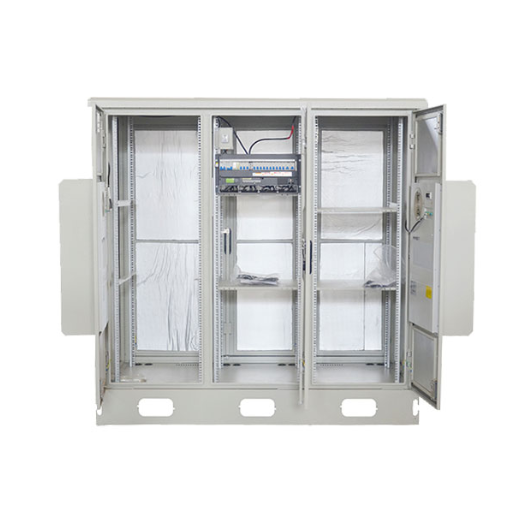
Outdoor telecom enclosures are engineered to endure a wide range of environmental factors so that the sensitive equipment can function properly and reliably with no interruptions. In addition, these enclosures have to protect against the highest and lowest temperatures, moisture, ingress of water, dust, and other environmental challenges. The right choice of materials, like metals that do not rust or plastics that are strong and durable, is vital to give the enclosure a long life and to resist environmental effects.
Outdoor telecom enclosures have to deal with thermal management as a primary factor. Good cooling systems like ventilation, heat exchangers, or air conditioning units, are very effective in keeping the internal temperatures stable and avoiding the overheating of the equipment. The weather can also be quite cold and could result in the need for the installation of heaters to be the source of the condensation or freezing problems. The balancing of these thermal management solutions ensures that the equipment is always in the right condition for performance.
Protection against physical threats such as vandalism and environmental threats like UV exposure and extreme weather events is one of the most important aspects to consider. The enclosures are often protected to certain standards that give the IP (Ingress Protection) ratings to ensure that they are resistant to dust and water. The security features such as high-quality locks increase the security of the enclosure while the use of coatings and finishes prevents UV damage. Through these design features, outdoor telecom enclosures are transformed into rugged and reliable devices capable of operation in diverse environmental conditions.
Challenges in Thermal Management

Common Issues Faced in Outdoor Telecom Cabinets
Four major difficulties met by outdoor telecom cabinets cover the issues of excessive heat, humidity, and thermal stress. Outdoor cabinets are forced to deal with several factors at once, thermal management among them, because they are frequently exposed to different environmental conditions.
🔥 Overheating
Challenge: Prolonged exposure to heat and sun can hinder equipment performance, lead to total breakdown or permanent damage.
Solutions: Good ventilation, heat sinks, reliable cooling systems (e.g. air conditioners or heat exchangers)
💧 Humidity Control
Challenge: Heavy condensation can short-circuit electric parts, while high humidity favors the development of mold and mildew.
Solutions: Install dehumidifiers or desiccants to keep moisture levels stable and protect equipment
🌡️ Thermal Cycling
Challenge: Alternating very cold and very hot weather causes gradual loss of strength, weak connections, cracked materials.
Solutions: Use hard materials that can endure temperature variations and add thermal insulation
Impact of Extreme Weather Conditions
Extreme weather conditions like very hot days, freezing nights, heavy rains, and gusty winds are some of the factors that very much influence the operation of outdoor cabinets. Prolonged exposure to such conditions can cause the materials to degrade, the structure to lose its integrity, and the inside equipment to perform less powerfully than usual. As a result, without any protection, these issues could lead to malfunctions and expensive repairs.
The first step to counter these adverse effects is to use materials designed to withstand the worst conditions. High-resistance anti-corrosive coatings have the power to repel moisture and humidity and UV-resistant materials can prevent the destruction caused by the sun’s rays over time. Moreover, ensuring that the cabinets have water-tight sealing qualities can stop water, dust, and other pollutants from getting in and messing up sensitive parts.
Temperature management is yet another major factor to take into account when trying to beat the consequences of extreme weather. Very hot weather can lead to overheating while cold weather can cause materials to become brittle or the build-up of condensation. The use of good thermal insulation and the deployment of temperature regulation systems, like fans or heaters, help to keep a constant operational environment inside the cabinets. When these precautions are taken, outdoor cabinets are able to prolong their reliability even when very harsh weather conditions are around.
Risks of Overheating and Their Mitigation
Proper Ventilation
Natural airflow is facilitated when vents or louvers are installed, hence the internal temperatures are affected as heat is dispersed. This is a straightforward and efficient method, particularly effective in hot regions.
Cooling Systems Deployment
Air conditioners or fans provide precise temperature control. Fans promote circulation and prevent heat buildup, while air conditioners offer precise temperature control in very hot conditions.
Strategic Cabinet Placement
Place the cabinet in the shade or away from direct sun to lessen radiation exposure. Apply reflective or white-colored painting to minimize heat absorption.
Innovative Solutions and Best Practices

Emerging Technologies in Thermal Management
The outdoor telecommunications enclosures are seriously influenced by the emerging technologies in thermal management which are in fact, the main reason for a complete overhaul of the old methods.
🔬 Phase Change Materials (PCMs)
PCMs absorb and release thermal energy to keep temperature constant. They store excess heat during hot periods and release it when temperatures drop, controlling internal conditions while decreasing energy consumption and reducing reliance on active cooling systems.
💧 Liquid Cooling Systems
These systems circulate coolant fluid that comes into direct contact with hot parts, absorbing heat and moving it away from internal components. Especially suitable for high-performance telecom setups where traditional air cooling may not handle heat effectively.
✨ Heat-Dissipating Coatings
Novel coatings and materials double the enclosure’s capability to reflect sunlight and radiate heat, thereby decreasing the heat load. Combined with new insulation methods, these solutions enhance reliability and performance in harsh environmental conditions.
Case Studies of Successful Thermal Management
Case Study 1: Enhanced Cooling Systems in Desert Areas
Challenge: Extreme heat with external temperatures exceeding 120°F in desert regions.
Solution: Enclosures treated with high-reflective coatings and passive cooling systems to reflect solar radiation and allow efficient heat dissipation.
Results: Continuous telecom operation, decreased power consumption, and reduced maintenance costs despite extreme environmental conditions.
Case Study 2: Reliable Operation in Sub-Zero Temperature Places
Challenge: Freezing temperatures in Nordic countries affecting telecom enclosure performance.
Solution: Advanced thermal insulation and heating methods to reduce heat loss and maintain steady equipment performance.
Results: Increased system reliability even during harsh winter storms, sustaining connectivity for the local population.
Case Study 3: Coastal Areas with Extreme Humidity
Challenge: High humidity and ever-changing temperatures in coastal locations.
Solution: Moisture-proof thermal barriers with controlled ventilation systems to keep the interior free of condensation and ensure proper cooling.
Results: Improved thermal management and prolonged life of sensitive electronic parts, demonstrating the need for custom-tailored strategies.
🛠️ Actionable Tips for Engineers and Technicians
- ✓ Ventilation and Insulation Should Be Given Priority: Effective ventilation systems must be installed to prevent condensation and overheating. Proper insulation is needed for a stable internal temperature during extreme weather conditions.
- ✓ Reliable Cooling Solutions Must Be Implemented: Use cooling systems specially designed for the specific heat load and environmental conditions. Heat exchangers or thermoelectric coolers can be even more useful in controlling temperature.
- ✓ Taking Care and Monitoring Regularly: Routine inspections can check for dust, corrosion, and component wear. Monitoring systems delivering real-time temperature and humidity data help in the prevention of potential system failures.
Frequently Asked Questions (FAQ)
What is thermal management in outdoor telecom enclosures and why is it critical?
Thermal management in outdoor telecom enclosures is an extremely important aspect of the telecom industry since it is the easiest way to prevent even the most delicate electronic equipment in the enclosure from being ruined by extreme temperatures. Proper heat management not only prevents immediate equipment damage but also keeps telecom operators ready for unexpected service outages in remote and urban sites.
What are the main cooling strategies used for outdoor telecom enclosures?
The cooling strategies consist of passive methods like natural convection and better cabinet configuration, and active methods such as integrated air conditioning, closed-loop cooling systems, and air-to-air heat exchangers, which are all aimed at cooling the enclosure. The best solution depends on heat generated by the equipment, the cooling capacity, and the ambient temperature at the outside location.
How do air-to-air heat exchangers work and when should they be used?
An air-to-air heat exchanger takes the hot air from inside and gives the heat to the cooler air outside, but the air does not mix with each other, hence the cooling becomes more efficient and electronics are protected from dust and dirt. They are recommended for moderate heat loads and in areas where it is critical to prevent dust or particulate penetration through sealing. Use them if the ambient air conditions allow for efficient heat transfer.
When are closed-loop cooling systems or integrated air conditioning recommended?
Closed-loop cooling systems and integrated air conditioning will be employed whenever the cooling needs cannot be met by passive or air-to-air setup such as equipment racks with large thermal rise, dense equipment racks, or critical telecom networks that need high cooling capacity. Contaminated air is not allowed in the internal area as the air is isolated, thus preventing contamination and keeping stable enclosure temperature even in extreme conditions.
What passive methods and configuration choices improve thermal performance?
Passive methods include maximizing cabinet orientation, reflective coating application, proper ventilation ways for natural convection, heat sinks, and using gaps to reduce temperature in hot spots. The selection of the right cabinet with features like vents and baffles that support management reduces the need for active cooling and improves cooling efficiency for moderate heat loads.
How should telecom operators plan for power failures and backup systems related to cooling?
In the event of a power failure, telecom operators should plan for battery backup systems and cooling provisions. The power of the backup system can keep fans, closed-loop pumps, or even minimal integrated air conditioning going to avoid the quick rise of enclosure temperature. To ensure uninterrupted service, cooling capacity and backup time must be in sync with heat generation and operational priorities.
What maintenance and inspection practices help prevent thermal issues?
Do the following regularly: inspect for dust and debris, clean air filters, make sure fans and pumps are working, check seals, and test integrated air conditioning and other cooling systems. By keeping an eye on the temperature inside the enclosure and spotting hot spots early, the chances of equipment failure can be significantly reduced. Regular inspections of outside plant cabinets help to maintain cooling efficiency and optimal thermal conditions.
How do ambient temperature and environmental factors affect cooling choices?
The air temperature around the equipment and the degree to which the equipment is exposed to dust or bacteria greatly determine what the most efficient cooling solution is. When the air outside is too hot, the air-to-air heat exchanger becomes less effective, hence the active cooling or closed-loop system becomes a better option. In case of dusty or corrosive environments, sealed systems along with filtration methods come into play as they can easily protect the electronics while keeping the cooling efficient.
How should operators select the optimal cabinet and cooling configuration for specific sites?
The selection of the optimal cabinet must consider factors such as the heat that will be produced by the equipment, the ambient temperature, the presence of dust or particulates, and the requirement for uptime. If the heat load is moderate, passive methods and air-to-air solutions might be used. In case of high heat loads or critical telecom networks, cabinets with air conditioning or cooling systems integrated within closed loops have to be chosen, backup systems included, and a proper configuration that allows for maintenance access and monitoring to prevent equipment failure must be ensured.
References
-
Academia.edu: Thermal Management of Outside Plant Telecommunication Cabinets – Discusses design and CFD modeling methodologies for thermal management in telecom cabinets, including maintaining optimal temperatures for components.
-
Universidad Católica de Honduras: Heat Transfer and Thermal Management of Electronics – Explores best practices for managing heat in electronic designs, relevant to telecom enclosures.
-
Outdoor Telecom Cabinets for Reliable Field Deployment | Wholesale from China Manufacturer


