
In global telecom deployment, outdoor enclosures are the first line of defense against harsh environments. From the -65°C Arctic frost to the 50°C+ desert heat, standard cabinets face risks of brittleness, cracking, deformation, and corrosion. To ensure long-term equipment reliability, enclosures must be engineered with the right materials, structural design, and surface treatment, tailored to their operating environment.
1. Core Environmental Challenges
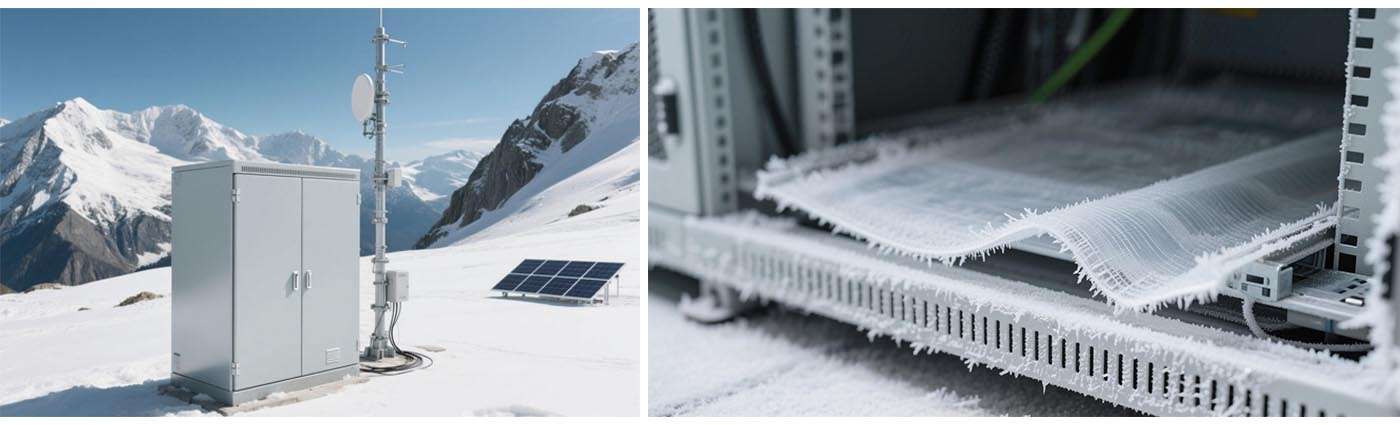
Arctic conditions:
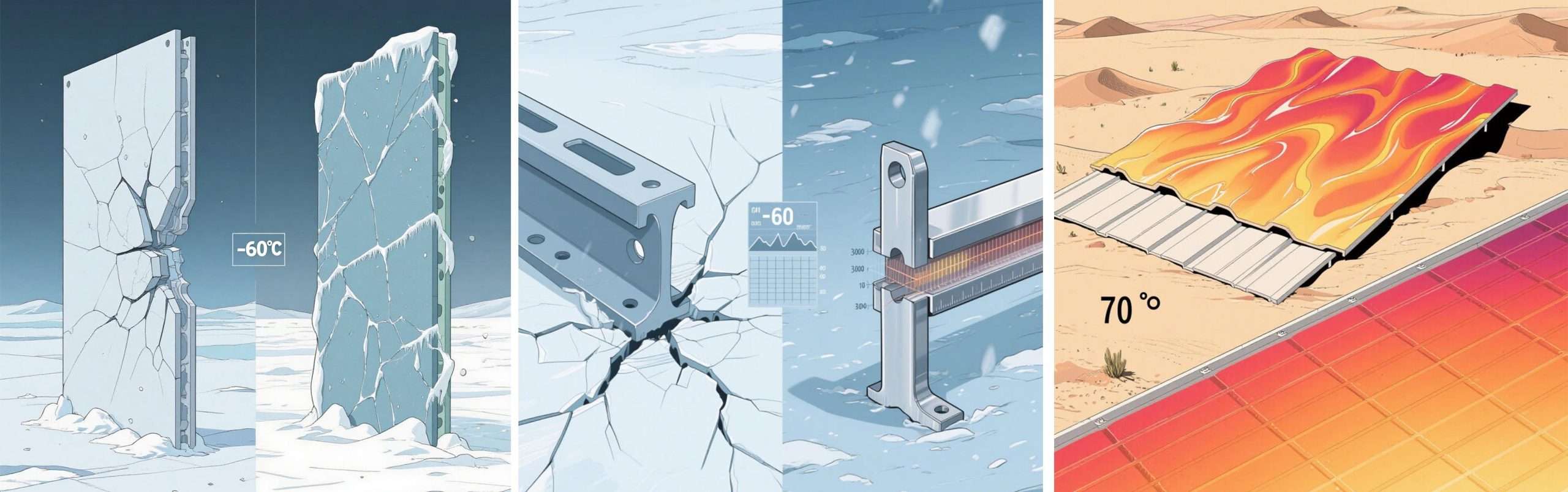
Risk of brittle fracture in plastics and untreated alloys under extreme cold.
Heavy snow load and frost infiltration, causing corrosion and condensation.
Reduced heat dissipation efficiency in low-pressure regions and UV aging during summer.
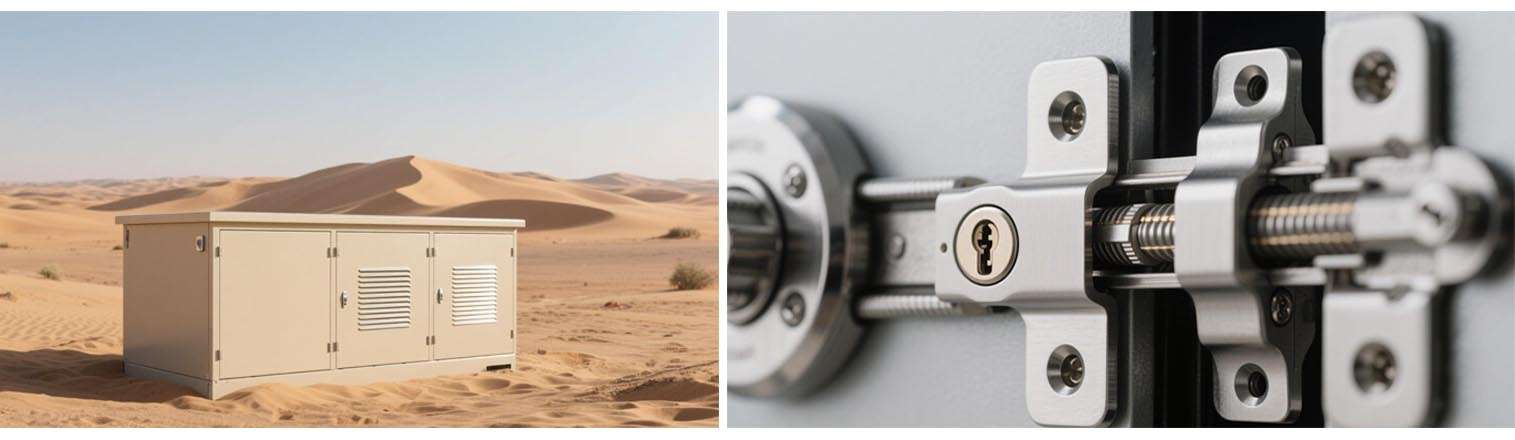
Desert conditions:
High-temperature deformation of metals and softening of plastics.
Sand erosion damaging coatings and blocking ventilation paths.
Intense UV radiation and large day-night temperature swings causing material fatigue and sealing failures.
2. Material Selection
| Environment | Recommended Materials | Key Advantages | Avoid/Limit Materials | Risks |
|---|---|---|---|---|
| Arctic | Q345D low-temperature steel, GRP (glass fiber reinforced plastic), 304 stainless steel | Maintain toughness at -60°C, strong corrosion resistance | ABS plastics, untreated aluminum alloy | Brittle below -30°C, stress corrosion |
| Desert | 5052 anodized aluminum, hot-dip galvanized steel, UV-resistant GRP | Withstand >120°C, resist sand abrasion, excellent UV aging resistance | Cold-rolled steel, PVC plastics | Prone to rust, soften above 60°C |
3. Structural Design
Arctic-focused design:
Snow load protection: Sloped V-shaped roof ≥30° to prevent accumulation.
Sealing & condensation control: Double EPDM sealing strips, ventilation membranes to release moisture.
Thermal insulation: Double-wall sandwich with PU foam to minimize heat loss.
Desert-focused design:
Dust and heat management: Louver + mesh + baffle ventilation system, recessed heat-dissipation grids.
Deformation resistance: Corrugated panels and adjustable locks to compensate for thermal expansion.
Lightweight durability: Aluminum alloy shell with reinforced wear plates on sand-exposed areas.
4. Surface Treatment
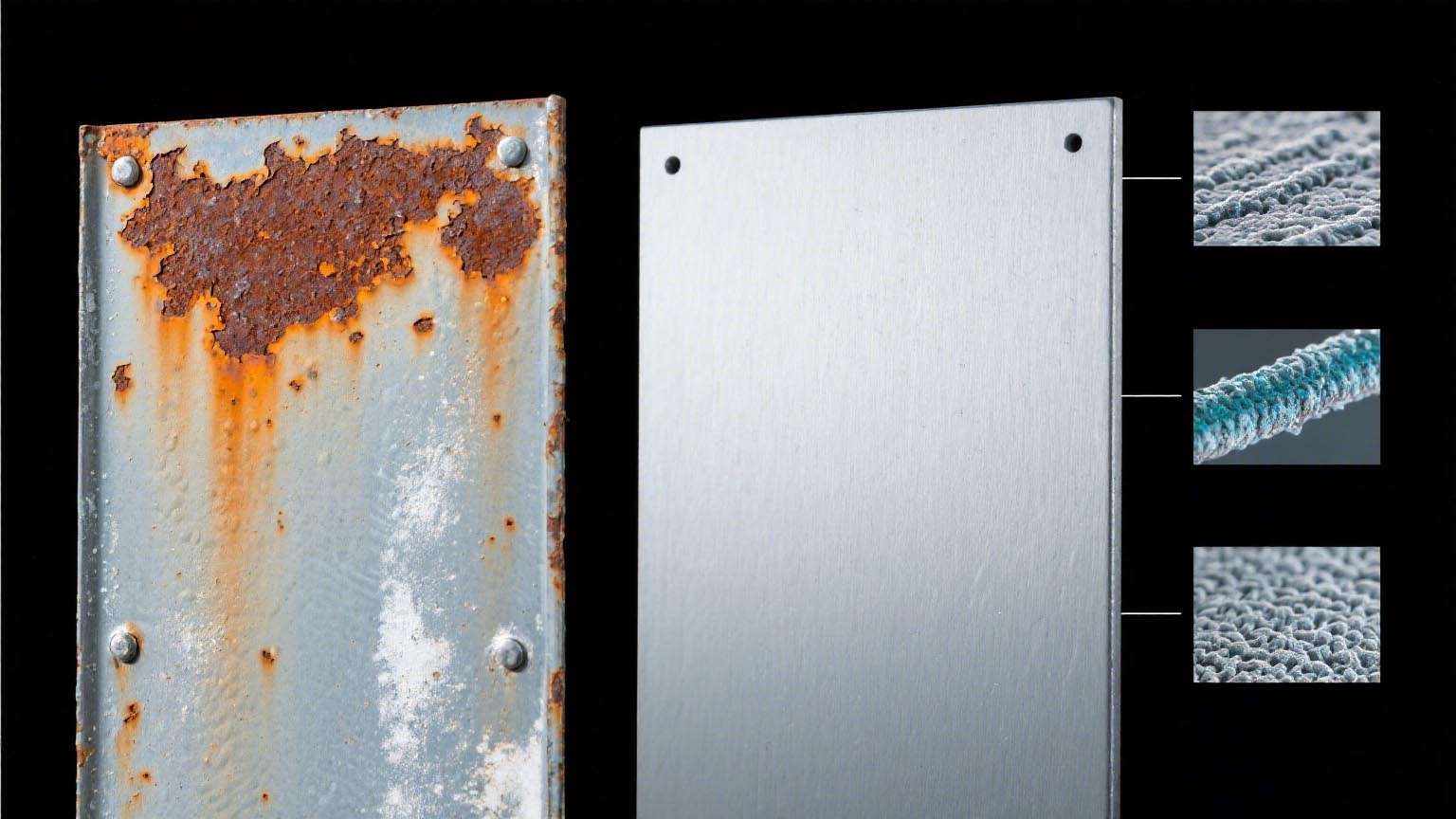
Arctic: Epoxy powder coating + zinc pre-treatment; Dacromet coating for metal parts to resist saline frost.
Desert: Hard anodizing for aluminum (≥15µm oxide layer); hot-dip galvanizing + fluorocarbon coating for steel to resist UV and sand erosion.

5. Core Design Principles
Arctic: Focus on low-temperature resistance, snow load protection, condensation prevention.
Desert: Focus on heat resistance, sand/dust protection, UV durability.
No “one-size-fits-all” solution—customization based on local climate and equipment needs is essential.
6. Authority and Partnership
At KDST, technical excellence is at the core of every enclosure solution.
With 10+ years of R&D experience, we have built material databases, structural methodologies, and surface treatment systems validated in real-world deployments.
All designs comply with IEC, NEMA, and IP standards, ensuring global interoperability and reliability.
But we don’t just deliver technology—we deliver partnership.
From consulting and prototyping to production and certification, our team supports customers across the entire lifecycle.
Whether your project faces polar cold, desert heat, coastal salinity, or industrial stress, we provide customized enclosures engineered for reliability, efficiency, and long service life.
👉 Partner with KDST to ensure your telecom networks stay protected—no matter how extreme the environment.


