
The NEMA 4 vs NEMA 12 question comes down to environment, mostly. A NEMA 12 enclosure is built for indoor use against dust, falling dirt and dripping non-corrosive liquids, while a NEMA 4 adds windblown dust, rain, splashing water, hose-directed water, sleet and outdoor exposure. Get the wrong one and you are paying for protection you will never use, or inviting water damage into a panel that was never sealed to withstand it. Here is the breakdown of where the two differ — from the test figures to IP equivalents, materials and the decision rules many comparisons leave out.
Quick Specs: NEMA 4 vs NEMA 12 at a Glance
| Attribute | NEMA 12 | NEMA 4 |
|---|---|---|
| Use environment | Indoor only | Indoor & outdoor |
| Dust | Falling dirt, circulating dust, lint, fibers | + Windblown dust |
| Water | Dripping & light splashing | + Rain, splashing, hose-directed water (≥65 GPM test) |
| Ice / sleet | Not rated | Undamaged by external ice formation |
| Corrosion | Not rated → use NEMA 4X | Not rated → use NEMA 4X |
| Approx. IP equivalent | IP52 | IP66 |
| Typical material | Powder-coated carbon steel | Gasketed steel (4X: 304/316 stainless) |
| Relative cost | $ (lower) | $$ (gasketing + sealing add cost) |
Definitions per National Electrical Manufacturers Association (ANSI/NEMA 250-2020). NEMA 250 refers to the following protection measures: 12: Falling Dirt and Dripping Non-Corrosive Liquids. 4: Wind-blown Dust and Rain; Splashing Water; Hose-Directed Water. The following are IP equivalents based on NEMA 250’s one-directional conversion: NEMA 12 is IP52. NEMA 4 is IP66.
NEMA 4 vs NEMA 12: The Bottom Line in 30 Seconds
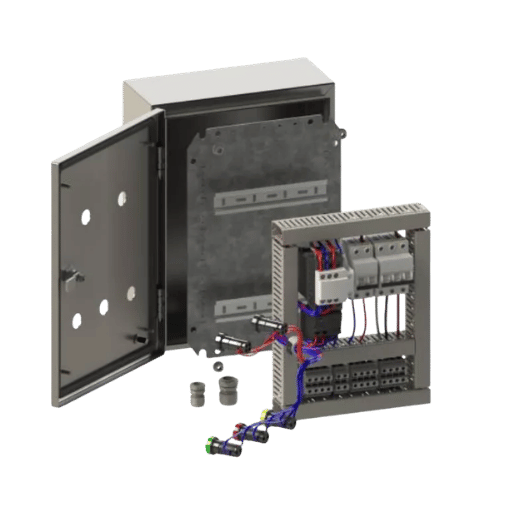
Both ratings fall under the same standard, ANSI/NEMA 250-2020, and both standards promise protection against human contact with hazardous electrical parts. Where they differ is the type and extent of protection against damaging environmental conditions. NEMA 12 is an industrial indoor-rated enclosure intended for protection against settling dust and the occasional oily drip. A NEMA 4, by contrast, is a watertight industrial indoor/outdoor enclosure designed to withstand a direct hose-down and provide an outdoor seal against windblown dust and precipitation.
Here is the one line worth remembering: NEMA 12 keeps the dust and drips out; NEMA 4 adds the rain, the hose-down and the outdoor seal — and only NEMA 4X survives the salt. Everything below is the detail behind that sentence.
Don’t pick a rating based solely on the number. It is not always a straight escalation of protective properties (find out more on that later in the section “NEMA ratings are not a step-wise increase”). Consider the ultimate location and use case of the electrical enclosure.
What Is a NEMA 4 Enclosure?
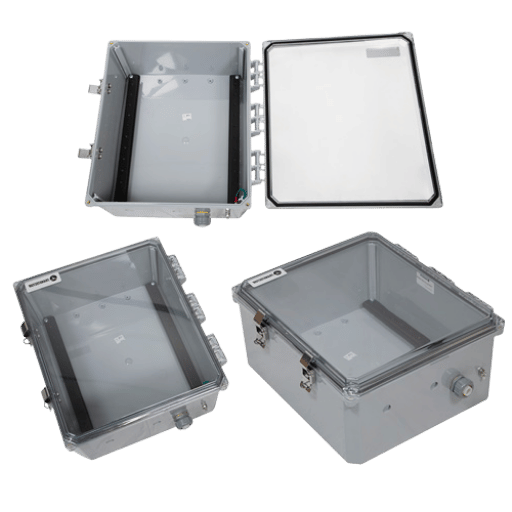
A Type 4 enclosure (aka NEMA 4) is a watertight industrial electrical enclosure built for use in either outdoor or indoor applications. This type of enclosure is manufactured to protect internal electrical components from environmental elements according to the American National Standards Institute and the National Electrical Manufacturers Association (ANSI/NEMA) standards document 250-2020. Specifically, Type 4 enclosures are designed to prevent the ingress of water and safeguard the enclosed equipment from external events such as wind-blown dust and rain, splashing water, hose-directed water, sleet and snow, as well as potential external ice formations on the enclosure surface. Most importantly, it must maintain its watertight seals throughout all these challenging conditions.
Earning this designation hinges on one test: the hose-down. Type 4 enclosures must meet strict standards by remaining completely sealed after enduring directed sprays of up to 65 gallons of water per minute, applied through a 1-inch diameter nozzle from a distance of no less than ten feet, for at least five minutes, with streams aimed at every joint and fastener. This is a demanding test, so NEMA 4 ratings appear in any environment where liquid is a major concern.
What is a NEMA 4 enclosure used for?
For anything left outdoors or washed with water, a NEMA 4 enclosure is the default rating. It’s the likely home for your outdoor control and instrumentation panel, the workroom in a food and beverage wash-down area, the enclosure in a car wash, the cabinet at a wastewater or water-treatment facility, coastal and marine installations, and any construction site. If a panel will be exposed to a pressure washer, rain, and wind-driven dust, NEMA 4 is your baseline-not your ceiling. For particularly corrosive or coastal environments, step up to NEMA 4X; for out-of-doors telecom or power gear, investigate purpose-built outdoor NEMA-rated enclosures.
✔ NEMA 4 — Advantages
- Indoor and outdoor use in one rating
- Survives direct hose-down and driving rain
- Sealed against windblown dust and ice formation
⚠ NEMA 4 — Limitations
- No corrosion rating — needs 4X for salt/chemicals
- Water-tight, but not submersible (that’s NEMA 6/6P)
- It will cost you more than NEMA 12, as gasketing and sealing don’t come free.
What Is a NEMA 12 Enclosure?
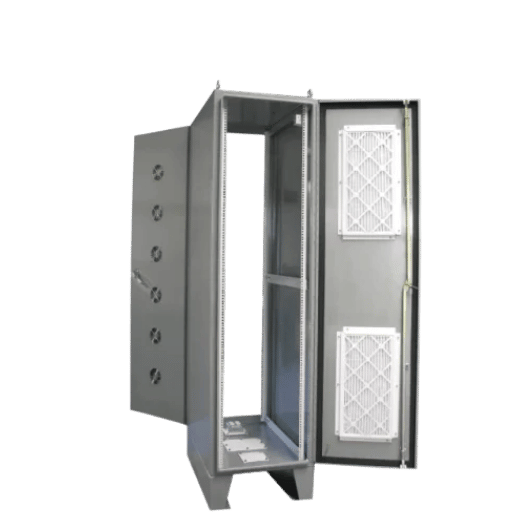
A NEMA 12 enclosure is an indoor, general-purpose electrical enclosure — the workhorse box of the plant floor. Specifically, under NEMA 250, a Type 12 enclosure protects against falling dirt, circulating dust, lint, and fibers, and the dripping and light splashing of non-corrosive liquids-and it’s drip, dust and rust-tested. In plain English: the most popular panel box used in any plant from clean to fairly dusty where your only exposure to liquid will be oil or coolant dripping from the machine it monitors.
Key takeaway in NEMA 12’s definition is “indoor” and “dripping and light splashing of non-corrosive liquids.” Because it’s gasketed and made without knockouts, it keeps dust out, but it isn’t designed for pressurized streams or outdoor weather; once out in the rain and wind, it offers zero protection from the elements and will eventually rust, fog over, and take a beating from UV.
Does NEMA 12 protect against oil and coolant?
Only under certain circumstances. NEMA 12 protects against dripping and light splashing-exactly what makes it ideal above machines and automation cells with coolant mist and oil drops. However, it doesn’t offer protection against a directed stream of coolant, a wash-down, or the caustic chemical, so as soon as liquids are pressurized or aggressive, you’re out of NEMA 12 and heading for NEMA 4 (pressure) or NEMA 4X (corrosive). This single limitation-protection from drops and sprays-is by far the most frequent failure point for NEMA 12 panels in the field.
The Core Differences: Water, Dust, Environment & Corrosion
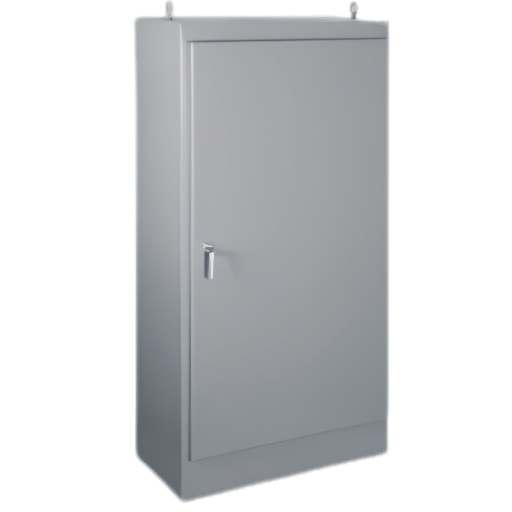
Let’s see how they stack up side by side. Instead of generic terms like “tough,” I’ve translated the standards’ specific protections into comparable categories below.
| Dimension | NEMA 12 | NEMA 4 |
|---|---|---|
| Water ingress | Dripping & light splashing | Hose-directed water, ≥65 GPM, 1″ nozzle, ≥10 ft, 5 min |
| Dust | Falling/circulating dust, lint, fibers | + Windblown dust |
| Location | Indoor only | Indoor & outdoor |
| Ice formation | Not addressed | Undamaged by external ice |
| Corrosion | Not rated | Not rated (use 4X) |
| Submersion | No | No (use 6/6P) |
What really separates NEMA 4 and NEMA 12 comes down to two core elements: water protection and location. While both shield against airborne particulates, NEMA 12 is designed to handle gentle drips and light splatters of non-corrosive fluids, whereas NEMA 4 is built for pressurized water from any direction, along with all-weather outdoor protection. In essence, NEMA 12 is your workhorse for indoor, dry-clean to dusty environments, while NEMA 4 is your rugged solution for exposed, wet, and outdoor conditions.
Is a NEMA 4 enclosure completely waterproof?
No – and this is where specs can land you in trouble. NEMA 4 is watertight (resistant to a hose-down), not waterproof (resistant to submersion). It confirms that the box can stand up to a powerful stream of water from multiple directions at a high volume; it tells you zero about how it’s going to do while submerged underwater for an extended time. If your gear could ever potentially be completely underwater (flooded vault, manhole, tidal zone, etc.), then you need a NEMA 6 or NEMA 6P, both of which are specifically rated and tested to be fully submerged up to a specified depth and time. Mistaking NEMA 4 as fully “waterproof” is a common, expensive mistake.
Neither NEMA 4 nor NEMA 12 accounts for corrosion. Should salt spray, a coastal atmosphere, or chemical splashes be expected, the designation you actually need is NEMA 4X, which adds a corrosion test to the watertightness rating of NEMA 4. It is common to specify “NEMA 4” on a seaside installation and be terribly surprised when the equipment becomes an object of rust.
Where NEMA 4 and 12 Fit in the Full NEMA Rating System
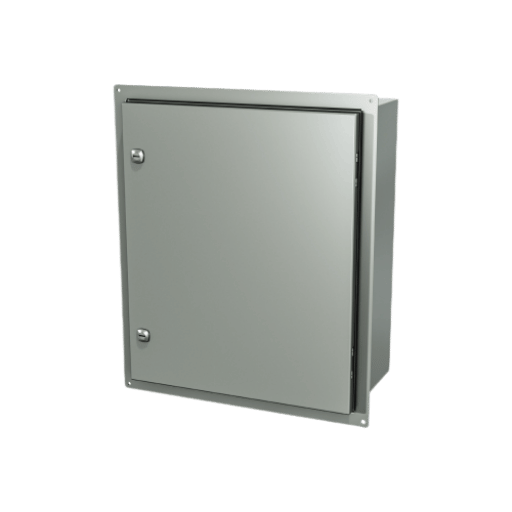
Because they are part of a larger system of enclosures, understanding your neighbors helps you avoid over- and under-specifying. A bit of nuance that most guides fail to emphasize is that the NEMA numbers are not a perfect ordering or linear ranking of protection levels. A higher NEMA number does not mean it will always meet the criteria of lower-numbered NEMA ratings (for instance, NEMA 3, 4 and 6 all protect against outdoor water exposure, while type 5 does not). So while it’s true that NEMA 4 offers a higher level of protection against water than NEMA 12, don’t read too much into the numbers as a fixed ranking.
| Rating | Protects against | When to use it |
|---|---|---|
| NEMA 1 | Indoor, contact + light dust | Dry indoor, basic — cost saver |
| NEMA 3R | Outdoor rain, sleet, snow, ice (omits windblown dust) | Outdoor, low-dust, budget weatherproofing |
| NEMA 4 | Indoor/outdoor, hose-directed water, windblown dust, ice | Outdoor or washdown, non-corrosive |
| NEMA 4X | NEMA 4 + corrosion (salt spray) | Coastal, chemical, food washdown |
| NEMA 6P | Prolonged submersion at limited depth | Flooding, manholes, immersion |
| NEMA 12 | Indoor dust, falling dirt, dripping non-corrosive liquids | Indoor plant floor, control panels |
| NEMA 13 | Indoor dust, spraying water/oil/non-corrosive coolant | Indoor with oil/coolant spray |
Our NEMA enclosure rating system guide dives deeper into how all of these ratings are determined, tested, and defined. If what you’re really comparing is outdoor equipment, take a look at our guide on NEMA 3R enclosures and the NEMA 1 vs NEMA 4 vs NEMA 4X comparison to weigh your most common alternatives to NEMA 4.
NEMA-to-IP Cross Reference: What 4 and 12 Mean in IP Terms
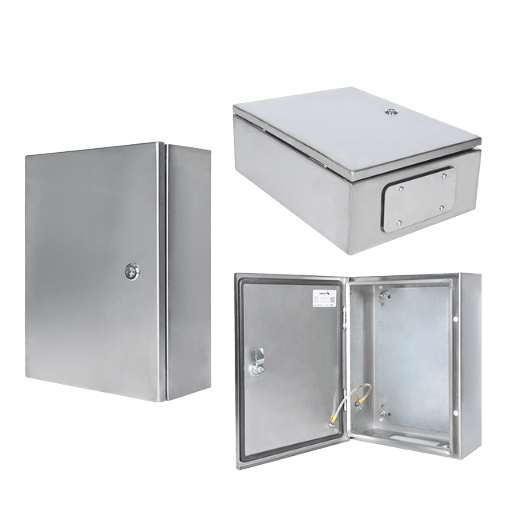
If you work with international equipment, you’ll soon encounter IEC International Protection (IP) codes instead of NEMA codes. NEMA provides a stable, one-directional conversion from NEMA ratings to IEC IP codes — here is what the commonly used ones map to:
| NEMA rating | Approx. IP equivalent | Reading the IP digits |
|---|---|---|
| NEMA 12 | IP52 | 5 = dust-protected, 2 = dripping water at 15° |
| NEMA 4 / 4X | IP66 | 6 = dust-tight, 6 = powerful water jets |
| NEMA 6P | IP67 | 7 = temporary immersion |
A pair of warnings comes with this table. First, you’ll see slightly different IP numbers in the wild — some references list NEMA 12 as the official IP52, while others show IP54 — so when it really counts, cite the NEMA-published value and the test, not a third-party chart.
NEMA 4 vs IP65: which rating wins?
They test different things, so which one “wins” depends on the threat. On water, NEMA 4 maps to IP66, a higher water-jet level than IP65. But the deeper point is direction: you can convert NEMA to IP, yet not reliably IP back to NEMA. Beyond water and dust, NEMA also tests for external ice formation and, in the case of 4X, corrosion — conditions the IP system does not evaluate. An IP66 fixture can look equivalent on paper yet still fail in a coastal environment where a NEMA 4X enclosure would survive. For a fuller treatment, see our NEMA vs IP rating cross-reference.
Materials & Construction: How the Rating Is Actually Built
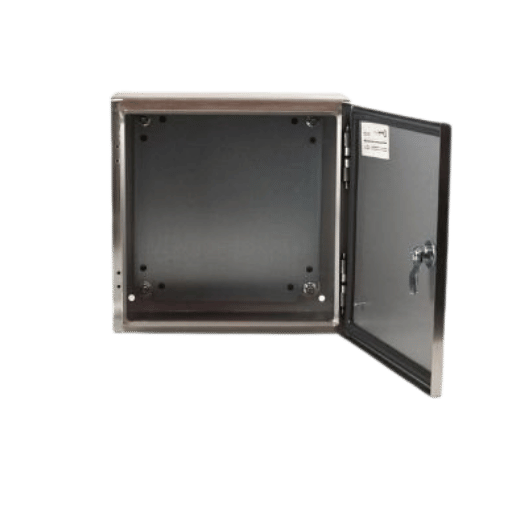
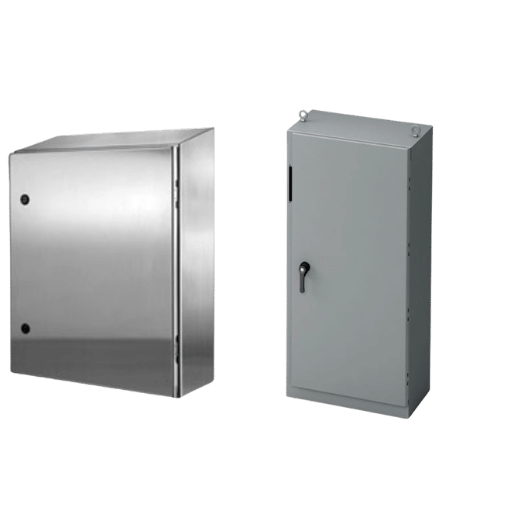
A rating is only as good as the enclosure carrying it. NEMA 4, 4X and 12 diverge in terms of material choice. NEMA 12 enclosures are most often made of carbon steel with a powder coat-strong, inexpensive, and fine for a dry indoor panel. NEMA 4 builds on that by adding a continuous gasket to seal seams to survive the hose-down test and often uses a carbon steel or fiberglass box. Corrosion resistant NEMA 4X enclosures are most often made of 304 or 316 stainless steel, or the polycarbonate and fiberglass composites.
Buying choices come down to 304 versus 316. If your general industrial corrosion needs are moderate, go with the cost savings of 304 stainless. If there’s a high concentration of chloride-which means coastal locations with marine-air exposure, washes using chlorinated sanitizing cleaners, and food-grade washdowns with chlorinated cleansers-you need 316 stainless and its ability to resist chloride pitting thanks to a small amount of molybdenum. Save the premium for 316 in chloride applications and default to 304 elsewhere. KDST builds 304 and 316 stainless steel NEMA 4X enclosures for these conditions; for NEMA 4X grade selection, see our stainless steel enclosure guide.
📐 Engineering Note
Your gasket is your rating. Failed NEMA 4 applications typically fall along these three lines: a deteriorated gasket due to age and temperature; corroded or improperly sealed cable entries; and heat build-up due to poor thermal management within a sealed box. NEMA 4 rating will fail a system that relies on a cut and butt (rather than a full wrap) gasket at the enclosure door, that uses unsealed punchouts or NEMA 4 listed glands and conduits at wiring penetrations or that lacks internal cooling for heat-generating electronic components. Failure to properly seal your cable entry with a NEMA 4 certified device means your entire enclosure is not truly NEMA 4 rated at that penetration. For penetration-sealing best practice, see proper enclosure sealing during installation.
How to Choose: A Decision Framework by Environment
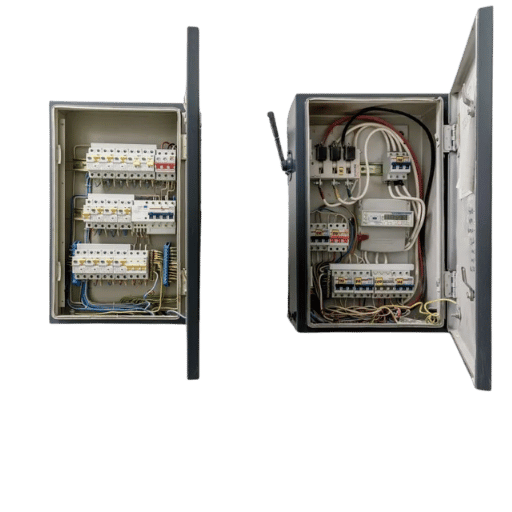
Don’t choose your rating based on the enclosure’s designation and don’t necessarily believe a rating if there are unsealed penetrations. Based on real environments, we chose the appropriate enclosure rating, and sometimes that’s NEMA 4 or 12 isn’t even on the table.
| Your environment | Choose | Why |
|---|---|---|
| Indoor, dusty plant floor, no liquids | NEMA 12 | Dust + drip protection without paying for weather sealing |
| Indoor with coolant/oil spray | NEMA 13 or 4 | 12 covers dripping, not directed spray |
| Indoor washdown / hose cleaning | NEMA 4 | Hose-directed water exceeds NEMA 12’s limit |
| Outdoor, rain/snow, non-corrosive | NEMA 4 (or 3R if low dust/budget) | Outdoor weather + windblown dust sealing |
| Coastal, chemical, salt or food sanitizers | NEMA 4X (316 SS) | Adds corrosion resistance NEMA 4 lacks |
| Risk of submersion / flooding | NEMA 6P | Only 6/6P is tested for immersion |
The selection process boils down to just a couple questions. Outdoors or regularly washed-down? Use NEMA 4. Extremely corrosive atmosphere? NEMA 4X. Clean, dry and dusty inside the factory? Use NEMA 12. Could you run it over with the forklift or is there a chance of submersion? Consider NEMA 6P. What if you are caught in between NEMA 12 and 4 in some gray area indoor location? Then evaluate the costs associated with a 4 rated versus 12 rated enclosure versus the potential costs of failure if the area eventually gets washed down or needs to be moved outdoors. The NEMA 4 premium can feel insignificant if you save yourself panel replacement later.
“We frequently see expensive failures in which the enclosure rating is appropriate-perhaps a NEMA 4X specification is being used-but it’s implemented incorrectly. Putting a knockout in an unsealed, un-gasketed 4X box isn’t really a NEMA 4X enclosure. Clearly communicate the application’s environment to prevent oversights in detail like that.”
Specifying, Verifying & Cost: What to Check Before You Buy
Most buyers will be surprised that NEMA ratings are self-certified. A manufacturer can determine their enclosure is NEMA compliant with any NEMA type – they don’t need outside verification testing of the standard. (And that also means there’s no guarantee it will meet the corresponding UL type equivalent: As one practitioner noted on r/ElectricalEngineering, “NEMA does not require third-party testing to verify the NEMA rating – the manufacturer alone can determine if the enclosure is in compliance”).
Because this can be unreliable for many applications, serious specifications call out UL certification, ensuring the design was independently validated to conform to a standard – like UL 50E and an IP rating. If an installation is mission critical or regulated, a UL-listed Type 4 / 12 rated enclosure is the key to remove the “trust us” on your specification documents.
- ✔ Don’t accept a self-declared “NEMA certified” claim for critical loads — demand UL Type certified instead
- ✔ Match material to the environment — 304 stainless for normal indoor/sheltered use, 316 stainless where chlorides or marine conditions exist
- ✔ Review the gasket type and verify the cable/conduit entries are all rated to match
- ✔ Don’t over-specify — a NEMA 4X box on a clean, dry indoor wall is wasted budget
For all other concerns like cost – you’ll pay a premium, certainly, for moving from a painted metal NEMA 12 box to a sealed NEMA 4, and then an even bigger premium for a stainless steel 316 NEMA 4X rated version – the cost differences are mainly driven by material grades, dimensions and certification, rather than the NEMA rating level. Ensure your quoting on a specific NEMA size when asking for pricing, as the cost difference can be substantial.
Where NEMA Enclosure Selection Is Heading
Going forward until sometime in 2026, there are two broad factors pushing up how engineers specify NEMA 4 and 12 enclosures. The first is a globalization phenomenon: As supply chains become integrated worldwide, the requests for quotation (RFQ) now commonly call out not only the NEMA rating (such as NEMA 4 or NEMA 12) but also its equivalent IEC 60529 IP rating-ensuring that a global solution can satisfy U.S. and international specification review. Writing, “NEMA 4 (IP66)” is rapidly becoming common, as this covers a broad range of outdoor exposure.
The second is increased environmental demand. Renewables (solar, storage), EV charging, data centers, and telecom build-outs place electrical equipment outdoors — exactly where these rugged boxes prove their worth, out in the dust, rain, and heat. That comes with an implied need for thermal management: a sealed, gasketed box that keeps the elements out can also trap heat inside. For outdoor-rated cabinets, it makes sense to pair the NEMA rating with a cooling strategy — see thermal management for outdoor enclosures and the trade-offs between compressor and thermoelectric cabinet cooling. The governing standard remains ANSI/NEMA 250-2020 — always confirm the edition against the latest NEMA publication before finalizing a spec.
Frequently Asked Questions
What is the difference between a NEMA 4 and 12 enclosure?
View Answer
Is NEMA 4 rated for outdoor use?
View Answer
Can I use a NEMA 4 enclosure outside?
Yes. A NEMA 4 enclosure is approved for indoor or outdoor applications, protecting against the elements like rain, snow and sleet. It’s also sealed for protection against hose-directed water, windblown dust, splashing, and an encasement ice formed over it is expected to remain operative.
Can a NEMA 12 enclosure be used outdoors?
View Answer
Is a NEMA 12 enclosure suitable for outdoors?
No. The NEMA 12 enclosure standard was created for use in clean indoor facilities. A NEMA 12 box will have no protection against the elements such as UV exposure, rain, or iciness on and around the box exterior.
A 3R (low-dust weather-rated), or 4 (washdown) are good choices for outdoors.
What’s the difference between NEMA 4 and 4X?
View Answer
What is a NEMA 4X enclosure?
A NEMA 4X enclosure adds corrosion resistance to the protection that a NEMA 4 enclosure provides. Construction materials such as stainless steel or non-metallic fiberglass are often used in NEMA 4X applications for use in the food industry, marine environments, or any location with salt, chemicals or high moisture.
Are NEMA 4X enclosures totally corrosion-proof?
View Answer
Is NEMA 4X an “all conditions” enclosure?
Although NEMA 4X enclosures are extremely resilient, they are not totally resistant to corrosion or chemicals. The X indicates resistance from salt spray or other such chemicals; the severity of such an environment determines what gauge of steel or material should be chosen. So, if there are considerable chemical issues you should invest in a more extreme enclosure option.
What is a NEMA 6P enclosure?
View Answer
When should I choose a NEMA 6P enclosure?
A NEMA 6P rated enclosure is built for prolonged submersion in water at a limited, specified depth. It suits water-prone locations such as quarries, flooded vaults and manholes — anywhere equipment faces extended immersion rather than just spray. If your gear could sit underwater rather than just get sprayed, 6P, not 4, is the rating you need.
Does a NEMA rating mean the enclosure is UL Listed?
View Answer
Does a NEMA rating guarantee a UL Type rating?
Not necessarily. The NEMA enclosures are a standard rating for use with a specific manufacturer’s own tests. Whereas the UL 50E rating signifies that the unit has been tested by third party laboratories.
Always confirm when requesting a NEMA-style enclosure that your enclosure has been built to comply with your specific electrical codes or standards required on your installation.
Need a NEMA 4, 4X or 12 enclosure built to match your exact environment and penetrations? KDST designs for indoor dust control, outdoor hose-down and corrosion — from clean plant rooms to harsh industrial and outdoor sites.
Why We Compare These Two Ratings
NEMA Enclosure Standards and Information The right enclosure for your application can improve performance and protect equipment from harsh conditions. With a deep understanding of NEMA standards and industry requirements, we engineer NEMA 4, NEMA 4X, and NEMA 12 enclosures that deliver reliable protection. Let our experts guide you to the perfect solution for your clean indoor settings or demanding outdoor environments.
This guide compares protection ratings drawn from NEMA 250 and IEC 60529 and does not promote one solution over another; your environment is the ultimate deciding factor.
References & Sources
- NEMA Enclosure Types — National Electrical Manufacturers Association (ANSI/NEMA 250)
- NEMA Standards — National Electrical Manufacturers Association
- NEMA Enclosure Types (definitions and tests) — Wikipedia, citing NEMA 250
- IEC 60529 — Degrees of Protection (IP Code) — International Electrotechnical Commission
- IP Code (IEC 60529) overview — Wikipedia
- NFPA 70 — National Electrical Code — National Fire Protection Association
Related Articles
- NEMA 1 vs NEMA 4 vs NEMA 4X: protection ratings compared
- What is a NEMA 3R enclosure?
- NEMA vs IP rating: key differences and cross-reference chart
- The complete guide to stainless steel electrical enclosures
- Thermal management in outdoor telecom enclosures
- Wall mount enclosure installation best practices


